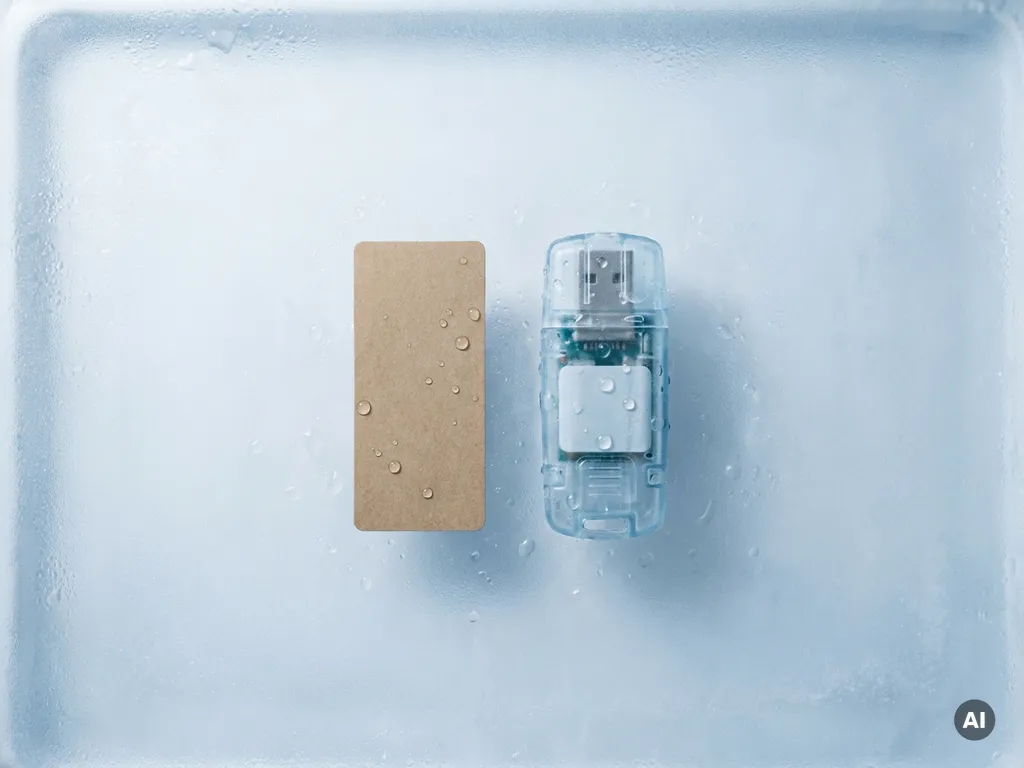
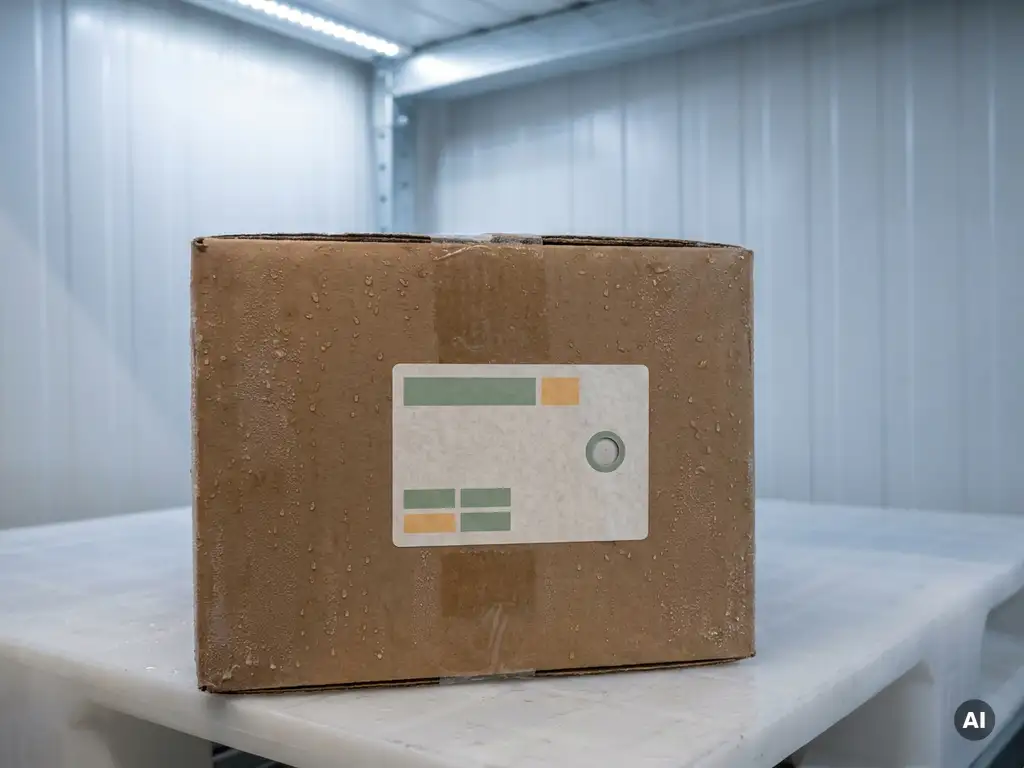
For most modern cold chain shipments, NFC temperature loggers offer a clear advantage over USB loggers: they require no special hardware to read, no software to install, and no physical connection to a computer. USB loggers remain a practical choice in specific scenarios, particularly where existing infrastructure is already built around them. This article breaks down exactly how each type works, where they differ, and how to choose the right one for your shipments.
How does an NFC temperature logger actually work?
An NFC temperature logger is a compact device that records temperature data throughout a shipment and transmits that data wirelessly to any NFC-enabled smartphone with a single tap. No app, no USB cable, and no dedicated reader hardware are needed. The person receiving the shipment simply holds their phone near the logger to access a complete temperature report.
During transit, the logger continuously measures and stores temperature readings at set intervals. When someone taps the logger with their phone, the NFC chip transfers the recorded data instantly. Depending on the logger type, this can trigger an automatic upload to a cloud dashboard, making the report accessible to both the sender and the receiver without any manual file transfer.
Tapp’s paper-based data loggers take this a step further. Built on a paper substrate with a lithium-free battery, these loggers use NFC tap technology to deliver temperature reports without requiring an app. When tapped, data is automatically uploaded to the cloud, giving both parties instant access to a full shipment report. Because they are made from agricultural waste paper, they can be recycled through standard paper waste streams globally rather than requiring e-waste disposal.
What are the main differences between NFC and USB temperature loggers?
The main difference between NFC and USB temperature loggers is how data is retrieved. USB loggers require a physical connection to a computer and dedicated software to extract and read the temperature report. NFC loggers transfer data wirelessly via a smartphone tap, with no computer, cable, or software required.
Beyond data retrieval, the two types differ across several practical dimensions:
- Hardware requirements: USB loggers need a computer with compatible software installed. NFC loggers work with any NFC-enabled smartphone, which is standard on virtually all modern devices.
- Speed of access: Reading a USB logger involves plugging in the device, opening software, and exporting a report. An NFC logger delivers the report in seconds with a single tap.
- Material and waste: Most USB loggers are single-use plastic devices with lithium batteries, requiring e-waste disposal. Electronic data loggers of all kinds, whether USB or Bluetooth, generate significant e-waste. Paper-based NFC loggers, by contrast, can be recycled through standard paper waste streams.
- Battery design: The lithium-free batteries used in paper-based NFC loggers are flight-safe and do not pose the same disposal challenges as the lithium batteries found in electronic loggers. They are also designed to last the duration of a shipment without the risk of battery failure mid-transit that can sometimes affect older electronic loggers.
- Infrastructure investment: USB-based systems often require receiving parties to have specific software set up in advance. NFC loggers place no burden on the receiver at all.
When should you choose a USB logger over an NFC logger?
A USB logger may be the better choice when your operation already has an established system built around USB data retrieval, and all parties in your supply chain have the necessary software and hardware in place. In closed, controlled environments where the same team always handles both dispatch and receipt, USB loggers can work reliably.
USB loggers may also suit situations where the receiving party has no NFC-capable smartphone, though this is increasingly rare given how widely NFC is supported on modern devices. Some legacy quality management systems are also designed to accept data only in formats generated by specific USB logger software, making switching more complex in the short term.
That said, the practical case for USB loggers is narrowing. The requirement to plug a physical device into a networked computer is a genuine barrier in many professional environments, particularly in sectors where IT security policies restrict what can be connected to company systems. In those cases, USB loggers create friction rather than solving it.
Which temperature logger is better for cold chain compliance?
Both NFC and USB temperature data loggers can meet cold chain monitoring requirements when they are properly calibrated and certified for accuracy. The logger’s measurement precision and recording interval matter far more for compliance than the data retrieval method. What differs is the ease and reliability of actually accessing and sharing that data when it matters.
NFC loggers have a practical advantage here: because anyone with a smartphone can read the data instantly, there is less risk of a report being delayed or going unread due to missing software or hardware. A quality manager at the receiving end does not need to wait for IT support or a specific workstation to check whether a shipment stayed within the required temperature range.
For organizations managing shipments across multiple partners, countries, or transport modes, the accessibility of NFC-based reporting reduces the chance of gaps in the documentation chain. Instant cloud upload means both sender and receiver have access to the same verified report, without manual file transfers or version discrepancies.
How Tapp helps with temperature data logging
As the only provider of paper-based data loggers, Tapp has built a monitoring solution designed for exactly the challenges described above. Here is what makes it different:
- No app or hardware needed: Any NFC-enabled smartphone reads the label instantly, placing zero technical burden on the receiving party.
- Automatic cloud upload: When the label is tapped, data is uploaded automatically to the TappOS dashboard, giving both sender and receiver access to a complete temperature report.
- Lithium-free, flight-safe battery: The paper-based design uses a lithium-free battery that is safe for air freight and avoids the disposal challenges of lithium batteries in electronic loggers.
- Recyclable through standard paper waste: Unlike electronic data loggers that require e-waste disposal, paper-based loggers go into the regular paper recycling stream.
- Monitors from -30°C to 50°C: Suitable for a wide range of temperature-sensitive goods, from fresh produce and pharmaceuticals to chemicals and floriculture shipments.
If you are ready to simplify your cold chain monitoring and reduce your environmental footprint at the same time, get in touch with the Tapp team to find out which solution fits your shipments.
Frequently Asked Questions
How do I know if my smartphone supports NFC for reading temperature loggers?
Most Android smartphones manufactured after 2013 and all iPhones from the iPhone 7 (2016) onward support NFC. You can check by going to your phone’s settings and searching for ‘NFC’ — if the option appears, your device is compatible. Given how widely NFC is now supported, the vast majority of smartphones used in professional and logistics environments will work without any issues.
Can NFC temperature loggers be used for air freight shipments?
Yes, but it depends on the battery type inside the logger. Standard electronic NFC loggers with lithium batteries may be subject to air freight restrictions depending on battery size and airline regulations. Paper-based NFC loggers like those from Tapp use a lithium-free battery specifically designed to be flight-safe, making them a straightforward choice for air cargo shipments without the need for additional compliance checks around battery classification.
What happens if the NFC logger is tapped multiple times during a shipment — does it reset the data?
No, tapping an NFC logger does not reset or alter the recorded data. The logger continuously records temperature readings independently of how many times it is read. Each tap simply retrieves the data stored up to that point, meaning you can check in on a shipment mid-transit without affecting the integrity of the final report.
How do I handle a situation where a temperature excursion is detected upon delivery?
When a temperature excursion is flagged, the first step is to document it immediately — the NFC logger’s cloud-uploaded report serves as a timestamped, tamper-evident record you can share with all parties. You should then follow your organization’s standard deviation management protocol, which typically involves notifying the sender, quarantining the affected goods, and initiating an investigation into which leg of the journey caused the breach. Having the full temperature log with timestamps makes it significantly easier to pinpoint responsibility and file any necessary claims.
What recording interval should I set for my temperature logger, and does it affect compliance?
The ideal recording interval depends on the sensitivity of your product and the duration of the shipment. For pharmaceutical shipments, intervals of 5 to 15 minutes are common and often required by regulatory guidelines such as GDP (Good Distribution Practice). For fresh produce or floriculture over shorter transit times, 10 to 30-minute intervals are typically sufficient. Always verify the required interval against the specific regulatory or customer requirements for your product category, as this is one of the factors that directly impacts compliance — not just the logger type.
Can paper-based NFC loggers withstand the physical conditions inside a cold chain shipment, such as humidity or freezing temperatures?
Paper-based loggers designed for cold chain use, such as those from Tapp, are engineered to operate reliably across a wide temperature range — in Tapp’s case, from -30°C to 50°C — and are built to handle the humidity and condensation typically encountered in refrigerated or frozen transit environments. The paper substrate used is treated to maintain structural integrity throughout the shipment. If you have a particularly demanding environment, such as deep-frozen pharmaceutical shipments, it is worth confirming the specific environmental ratings with the supplier before deployment.
Is it possible to integrate NFC logger data with an existing warehouse management or quality management system?
Yes, many NFC logger platforms, including cloud-based dashboards like TappOS, support data export and API integration, allowing temperature reports to be fed into existing warehouse management systems (WMS) or quality management systems (QMS). This is particularly valuable for organizations that need to maintain centralized records across multiple shipments and partners. If you are evaluating a switch from USB loggers, it is worth checking with your provider whether their platform offers the integration formats your current systems accept, to ensure a smooth transition without disrupting your compliance documentation workflow.