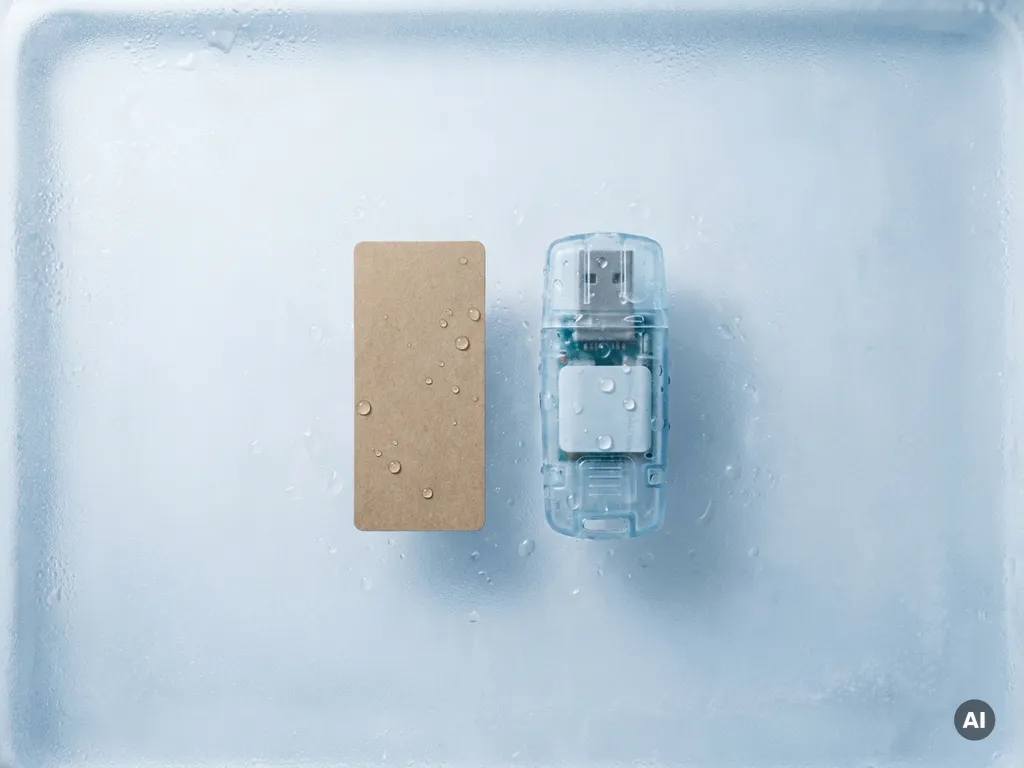
Paper-based dataloggers and NFC temperature data loggers are not mutually exclusive categories. A paper-based datalogger is a type of NFC logger, but the two terms are often used to describe very different products. The core distinction comes down to the physical substrate and battery design: traditional NFC loggers are built on plastic with lithium batteries, while paper-based loggers use a paper substrate and a lithium-free power source. This article unpacks exactly how each type works, what separates them, and which one fits your cold chain needs.
How does a paper-based datalogger actually work?
A paper-based datalogger is a thin, label-format device that continuously records temperature during a shipment and stores that data on an embedded NFC chip. The label is applied to packaging before dispatch, logs temperature passively throughout transit, and releases its full data record the moment someone taps it with an NFC-enabled smartphone. No app, no USB cable, and no dedicated reader hardware are required.
The label contains a miniaturized temperature sensor, a small lithium-free battery, and an NFC antenna, all integrated into a paper substrate made from agricultural waste. Because the battery only powers the sensor and memory rather than a wireless transmitter running continuously, it is highly efficient. When a smartphone tap activates the NFC chip, the stored temperature log is read and automatically uploaded to a cloud dashboard, giving both sender and receiver access to the full shipment report.
This passive logging approach means the label works quietly in the background throughout the journey, whether the shipment travels by road, sea, air, or rail, without requiring any interaction until the moment of delivery or inspection.
What’s the difference between paper-based and traditional plastic NFC dataloggers?
The key difference between paper-based and traditional plastic NFC temperature data loggers is the material and battery design, which affects environmental impact, waste handling, and ease of use. Plastic NFC loggers contain lithium batteries and electronic components that require e-waste disposal. Paper-based loggers use a recyclable paper substrate and a lithium-free battery, meaning they can be recycled through standard paper waste streams globally.
Beyond materials, there are three main categories of temperature data loggers on the market:
- Single-use electronic loggers: The current industry standard. Made from plastic with lithium batteries, these are discarded after a single trip and require proper e-waste disposal. Data is retrieved via USB or Bluetooth.
- Reusable electronic loggers: Also plastic-based with rechargeable batteries. They last multiple trips but eventually become e-waste. Data retrieval also relies on USB or Bluetooth connections.
- Paper-based loggers: A lithium-free, paper-substrate alternative. Recyclable through standard paper waste streams. Data is accessed instantly via NFC smartphone tap with automatic cloud upload, and no app is needed.
From an operational standpoint, plastic loggers often require dedicated readers or computers with USB access, which creates friction at receiving locations. Paper-based loggers remove that barrier entirely since any modern smartphone can read the data in seconds.
Battery longevity is another meaningful difference. Because paper-based loggers use a lithium-free battery engineered specifically for passive, low-draw sensing rather than continuous wireless transmission, the battery performance is well-suited for extended transit durations. Single-use plastic loggers often use generic lithium coin cells that were not purpose-built for cold chain sensing, which can affect consistency across temperature ranges.
Which datalogger is better for cold chain compliance?
For cold chain monitoring, the best datalogger is one that provides accurate, tamper-evident temperature records that are easy to access at the point of delivery. Both electronic and paper-based loggers can meet professional accuracy standards, but they differ significantly in how accessible and verifiable that data is for the receiving party.
Paper-based loggers have a practical advantage in situations where the recipient has no access to USB ports or proprietary software. A smartphone tap delivers the complete temperature report instantly, which means there is no delay between arrival and data review. This is particularly relevant in environments such as pharmaceutical receiving areas, where plugging an unknown USB device into a networked computer is often prohibited for security reasons.
For organizations monitoring shipments across diverse international partners with varying levels of technical infrastructure, a solution that requires zero hardware investment from the receiving party removes a significant operational barrier. The data is stored in the cloud and accessible to both sender and receiver as soon as the label is tapped, regardless of location.
Are paper-based dataloggers as accurate as plastic ones?
Yes. Paper-based temperature data loggers can match the measurement accuracy of traditional plastic electronic loggers. Accuracy depends on the quality of the temperature sensor and the calibration of the device, not on whether the housing is made of plastic or paper. Professional-grade paper-based loggers are designed to the same accuracy benchmarks as their plastic counterparts and are suitable for monitoring shipments across a wide temperature range, typically from around -30°C to +50°C.
One area where paper-based loggers often hold an advantage is battery reliability in cold conditions. Lithium-free batteries used in paper-based loggers are purpose-designed for the specific low-power demands of passive temperature sensing. They are not subject to the same performance drop in cold environments that some standard lithium coin cells experience, making them a dependable choice for refrigerated and frozen shipments alike.
The paper substrate itself is protected with a waterproof coating, so the label maintains its integrity throughout transit even in humid or wet conditions such as those found in refrigerated containers or fresh produce packaging.
How Tapp makes paper-based temperature monitoring simple
Tapp developed the world’s first paper-based datalogger, combining NFC technology with a sustainable paper substrate made from agricultural waste. As the only provider of this technology, Tapp’s solution is designed specifically for organizations that need professional cold chain monitoring without the environmental cost or operational complexity of traditional plastic loggers.
Here is what Tapp’s paper-based loggers offer in practice:
- Lithium-free, recyclable design: Labels are recyclable through standard paper waste streams globally, reducing e-waste by up to 90% compared to single-use plastic loggers.
- No app or hardware needed: Any NFC-enabled smartphone reads the label instantly, removing barriers for receiving parties anywhere in the world.
- Automatic cloud upload: Temperature data is pushed to the TappOS dashboard the moment the label is tapped, giving both sender and receiver access to the full shipment report.
- Universal transport compatibility: Suitable for road, sea, air, and rail, with a waterproof coating and a flight-safe, lithium-free battery.
- Customizable branding: Labels can carry your company logo and colors, making monitoring part of your brand experience.
If you are looking for a temperature data logger that is accurate, easy to use, and genuinely sustainable, explore Tapp’s paper-based loggers and find out how they can fit into your cold chain workflow. You can also book an intro call with an expert to discuss your specific cold chain requirements.
Frequently Asked Questions
How long can a paper-based datalogger record temperature during a shipment?
Most professional paper-based dataloggers are designed to cover typical international transit durations, generally ranging from several days up to 30 days or more depending on the logging interval configured. The lithium-free battery in paper-based loggers is purpose-built for passive, low-draw sensing, which means it sustains consistent performance throughout the journey without the power drain associated with continuous wireless transmission. If your shipments regularly exceed standard transit windows, it’s worth confirming the specific logging duration with your provider before deployment.
Can paper-based dataloggers be used for frozen shipments, or are they only suitable for refrigerated goods?
Paper-based dataloggers are suitable for both refrigerated and frozen shipments, typically covering a temperature range of around -30°C to +50°C. The lithium-free battery used in these labels is specifically engineered for low-power passive sensing and does not suffer the same performance degradation in sub-zero conditions that some standard lithium coin cells experience. This makes them a reliable choice across the full spectrum of cold chain applications, from fresh produce and pharmaceuticals to frozen foods and biologics.
What happens if the receiving party doesn't tap the label — is the data lost?
No, the data is not lost. The temperature log remains stored on the NFC chip embedded in the label until it is read, so the record is preserved even if there is a delay between delivery and the first tap. Once the label is tapped by any NFC-enabled smartphone, the full data history is uploaded to the cloud dashboard and becomes accessible to both the sender and receiver. This means late inspections, disputes, or audits can still reference the complete, unaltered temperature record from the shipment.
Are paper-based dataloggers accepted for regulated industries like pharmaceuticals or medical devices?
Paper-based dataloggers can meet the accuracy and data integrity requirements relevant to regulated cold chain industries, provided the specific device is properly calibrated and documented. For pharmaceutical applications in particular, the key compliance factors are measurement accuracy, tamper-evident data records, and audit-ready reporting — all of which a professional-grade paper-based logger can deliver. That said, organizations operating under frameworks such as GDP (Good Distribution Practice) or FDA 21 CFR Part 11 should verify that their chosen logger’s specifications and cloud data management align with their specific regulatory obligations before full deployment.
How do I get started with paper-based dataloggers if my team is used to traditional USB loggers?
The transition is straightforward because paper-based loggers eliminate complexity rather than add it — there is no new hardware to install, no software to configure on receiving-end computers, and no training required for recipients beyond a simple smartphone tap. For the sending side, the main steps are configuring the logging interval and alarm thresholds before dispatch, applying the label to the packaging, and sharing dashboard access with the relevant stakeholders. Starting with a pilot on a single shipping lane or product category is a practical way to validate performance and build internal confidence before rolling out across your full cold chain operation.
What should I do if a shipment shows a temperature excursion on the label's data log?
When a temperature excursion is detected, the cloud dashboard will display the exact timestamps and duration of the breach, giving you a precise record to work from rather than a simple pass/fail indicator. This data allows you to determine whether the excursion occurred during loading, transit, or at a handover point, which is critical for identifying where in the chain the failure happened and who bears responsibility. From there, you can follow your organization’s standard excursion management protocol — whether that involves quarantining the goods, notifying the carrier, initiating a product stability review, or filing a claim — backed by documented, tamper-evident evidence.
Can the labels be customized for different products or shipment types within the same organization?
Yes. Paper-based dataloggers like those offered by Tapp support customizable branding, including company logos and colors, which means labels can be tailored to reflect different product lines, business units, or customer-facing requirements. Beyond aesthetics, logging parameters such as measurement intervals and temperature alarm thresholds can typically be configured to match the specific requirements of different shipment profiles — for example, a tighter alarm range for biologics versus a broader one for ambient-sensitive goods. This flexibility makes it practical to standardize on a single label format across your operation while still meeting the distinct monitoring requirements of each product category.