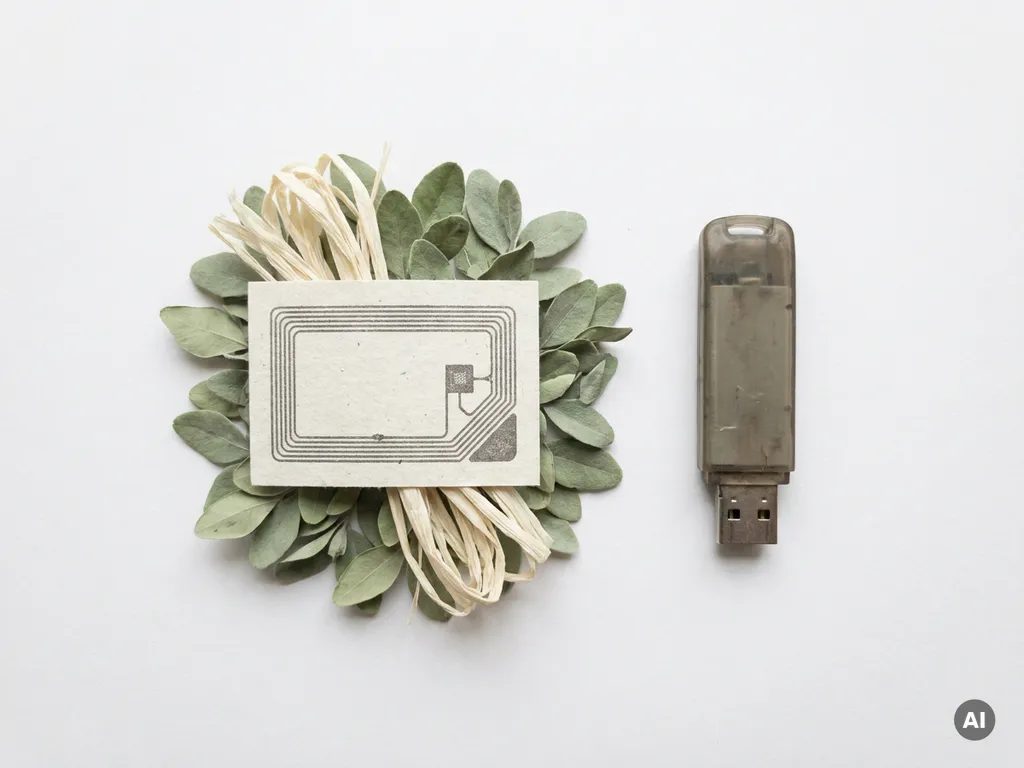
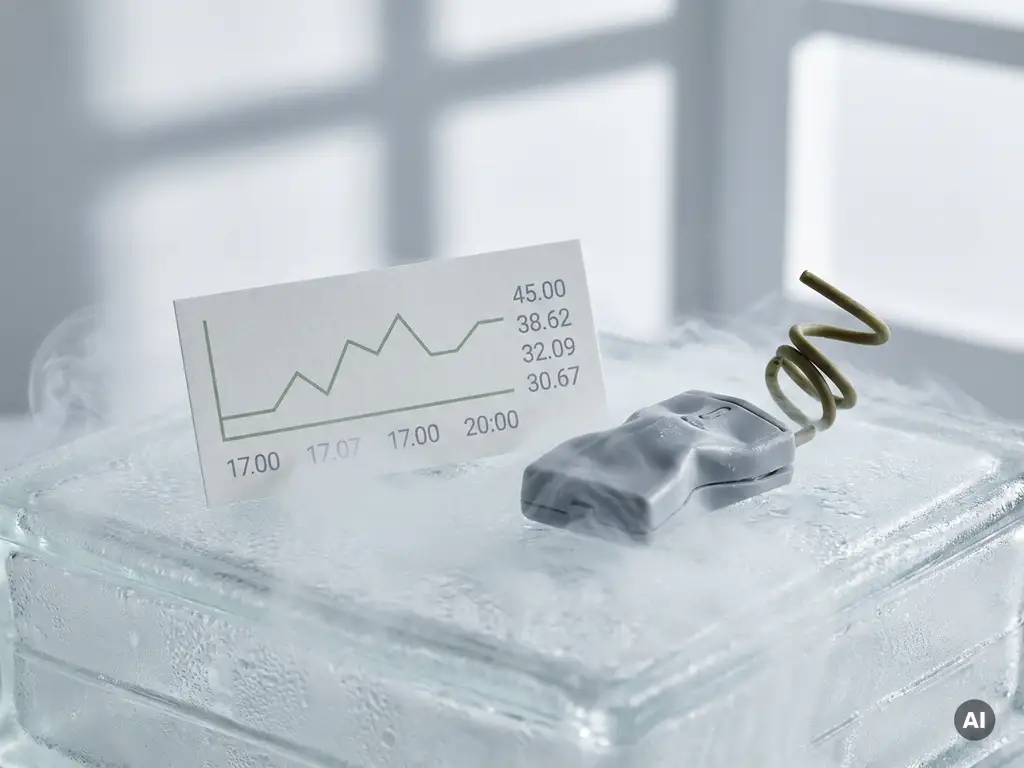
The best data logger alternative to traditional plastic devices is a paper-based NFC logger, a lightweight, smartphone-readable label that records temperature throughout a shipment and uploads data automatically when tapped. For organizations monitoring cold chains across food, pharma, or floriculture, this approach delivers accurate temperature monitoring without the hardware burden or disposal headaches of electronic devices. The sections below answer the most common questions about how these alternatives work and what sets them apart.
How does a real-time data logger actually work?
A data logger records temperature at set intervals throughout a shipment, storing each reading in its onboard memory. When the shipment arrives, the stored data is retrieved and reviewed to confirm whether the cold chain stayed within acceptable limits at every stage of the journey.
Traditional electronic data loggers use a sensor, a battery, and internal memory to capture and hold this data. Retrieval typically requires a USB connection or Bluetooth pairing with a dedicated device or computer, meaning someone at the receiving end needs the right hardware and software before they can access the information.
Paper-based NFC loggers work on the same core principle (continuous temperature recording at defined intervals), but retrieval works differently. Instead of plugging in a cable, anyone with an NFC-enabled smartphone simply taps the label. The recorded data uploads automatically to a cloud dashboard, accessible to both the sender and the receiver without any dedicated equipment.
What are the main alternatives to traditional plastic data loggers?
There are three main types of data loggers used in cold chain monitoring today: single-use electronic loggers, reusable electronic loggers, and paper-based NFC loggers. Each differs in material, battery design, data retrieval method, and end-of-life handling.
- Single-use electronic loggers: The current industry standard. Made from plastic and electronics with a lithium battery, these are discarded after a single trip. Data is retrieved via USB or Bluetooth. More than 80 million of these are discarded globally each year, requiring specialist e-waste disposal.
- Reusable electronic loggers: Also made from plastic and electronics, but designed for multiple trips with a rechargeable battery. They reduce per-trip waste compared to single-use devices, but still require USB or Bluetooth retrieval and eventually become e-waste at end of life.
- Paper-based NFC loggers: A fundamentally different approach. Built on a paper substrate with a lithium-free battery, these loggers are read by tapping any NFC-enabled smartphone (no app required). Data uploads automatically to the cloud, and the label itself is recyclable through standard paper waste streams.
Which data logger alternative is best for cold chain visibility?
For cold chain visibility, paper-based NFC loggers offer the most accessible approach because both the sender and receiver can view the same data the moment the label is tapped: no shared hardware, no software installation, and no manual file transfer required. Visibility is immediate and mutual.
Electronic loggers, whether single-use or reusable, create a visibility gap. The data sits locked in the device’s memory until someone physically retrieves it using the right connection and software. In pharma environments in particular, plugging a USB device into a networked computer is often restricted for security reasons, which means data retrieval becomes a procedural bottleneck rather than a seamless step.
Paper-based loggers eliminate that gap. Because data syncs automatically to a cloud dashboard when tapped, quality managers can review temperature records from any device, anywhere. This makes it easier to identify issues early, share records across teams, and maintain consistent oversight across international supply chains where partners may have varying levels of technical infrastructure.
How do paper-based NFC loggers reduce e-waste in logistics?
Paper-based NFC loggers reduce e-waste in logistics by replacing plastic and electronics with a paper substrate and a lithium-free battery. Because the logger is built from paper rather than plastic components and circuit boards, it can be recycled through standard paper waste streams globally: no specialist e-waste collection required.
The battery design is worth highlighting separately. Traditional single-use electronic loggers rely on lithium batteries, which are a significant driver of hazardous e-waste. Paper-based loggers use a lithium-free battery that is not only safer to dispose of but also well-suited to the single-use format. Lithium-free batteries maintain stable performance across a wide temperature range, which is precisely the environment a cold chain logger operates in. They also carry no flight restrictions, making them compatible with air freight without additional documentation or handling requirements.
Across the logistics industry, more than 80 million single-use plastic loggers are discarded each year. Shifting even a portion of those shipments to a paper-based alternative represents a meaningful reduction in both plastic waste and lithium battery disposal, supporting the kind of measurable environmental progress that sustainability teams are increasingly asked to demonstrate.
How Tapp helps with cold chain monitoring
Tapp has developed the world’s first paper-based datalogger, the only logger of its kind on the market. Designed for organizations that need accurate temperature monitoring without the waste or complexity of traditional plastic devices, Tapp’s solution brings together sustainability, simplicity, and professional-grade performance in a single label.
- Lithium-free, paper-based design: Recyclable through standard paper waste streams, reducing e-waste by up to 90% compared to traditional plastic loggers.
- No app, no hardware, no USB: Any NFC-enabled smartphone taps the label and retrieves the data instantly.
- Automatic cloud upload: Temperature data syncs to the TappOS dashboard the moment the label is tapped, giving both sender and receiver immediate visibility.
- Flight-safe and waterproof: Compatible with road, sea, air, and rail shipments without special handling requirements.
- Customizable branding: Labels can carry your company logo and colors, making the logger part of your brand experience rather than a generic add-on.
If you are looking for a data logger alternative that works across your entire supply chain without adding infrastructure or generating unnecessary waste, get in touch with Tapp to find out how paper-based monitoring fits your shipments. You can also book an intro call with an expert to discuss your specific cold chain requirements.
[seoaic_faq][{“id”:0,”title”:”Can paper-based NFC loggers match the accuracy of traditional electronic data loggers?”,”content”:”Yes. Paper-based NFC loggers record temperature at the same defined intervals as traditional electronic loggers and meet the same accuracy standards required for regulated cold chains in pharma, food, and floriculture. The core sensing and recording technology is professionally calibrated, so the shift to a paper substrate does not compromise data integrity. What changes is the form factor and retrieval method, not the quality of the temperature record.”},{“id”:1,”title”:”What temperature ranges can paper-based NFC loggers handle?”,”content”:”Paper-based NFC loggers are designed to operate across the full range of cold chain environments, from frozen pharmaceutical shipments to ambient floral deliveries. The lithium-free battery used in these loggers maintains stable performance across wide temperature fluctuations, which is one of the reasons it is particularly well-suited to cold chain logistics. If your shipments span multiple temperature zones, it is worth confirming the specific operating range with your supplier to ensure the logger matches your exact requirements.”},{“id”:2,”title”:”What happens if the NFC tap fails or the smartphone doesn’t read the label?”,”content”:”NFC reading failures are rare, but they are usually caused by the phone’s NFC antenna not aligning properly with the label, or by an NFC-blocking phone case. Removing the case and repositioning the phone over the label resolves most issues. Because the data is stored in the logger’s onboard memory, it is not lost if the first tap fails, and a successful tap at any point will still upload the full temperature record to the cloud dashboard.”},{“id”:3,”title”:”How do I get started with switching from plastic data loggers to a paper-based alternative?”,”content”:”The most practical first step is to run a parallel trial: use paper-based NFC loggers alongside your existing electronic loggers on a selection of live shipments. This lets you compare data retrieval speed, dashboard visibility, and team feedback without disrupting your current cold chain operations. Most suppliers, including Tapp, can provide sample labels and onboarding support to help you validate the solution against your specific shipment profiles before committing to a full rollout.”},{“id”:4,”title”:”Are paper-based NFC loggers compliant with pharmaceutical cold chain regulations?”,”content”:”Paper-based NFC loggers can be used in pharmaceutical cold chains, but compliance depends on how your organization documents and validates its monitoring process rather than on the logger format alone. The key requirements, such as calibrated sensors, tamper-evident records, and auditable data trails, can all be met through a cloud dashboard like TappOS. If your operation is subject to GDP, FDA, or similar regulatory frameworks, involve your quality assurance team early to confirm that the data output format and audit trail meet your specific validation requirements.”},{“id”:5,”title”:”Can multiple people access the temperature data from the same shipment?”,”content”:”Yes, and this is one of the practical advantages of cloud-based retrieval. Once the label is tapped and the data syncs to the dashboard, it is accessible to any authorized user, whether that is the quality manager at the sending facility, the receiving warehouse team, or a third-party auditor in a different country. There is no need to physically transfer a file or share a USB device, which significantly reduces the friction involved in multi-party cold chain oversight.”},{“id”:6,”title”:”What should I do if a temperature excursion is detected on arrival?”,”content”:”If the dashboard shows a temperature excursion, the first step is to note the timing and duration of the breach, as this determines whether the product is likely to be affected based on your mean kinetic temperature (MKT) thresholds. Share the full temperature report with your quality team and, where required, initiate your standard deviation handling or product quarantine procedure. Because the data is already in the cloud when the label is tapped, you can begin this process immediately on arrival rather than waiting for a file to be extracted from a physical device.”}][/seoaic_faq]