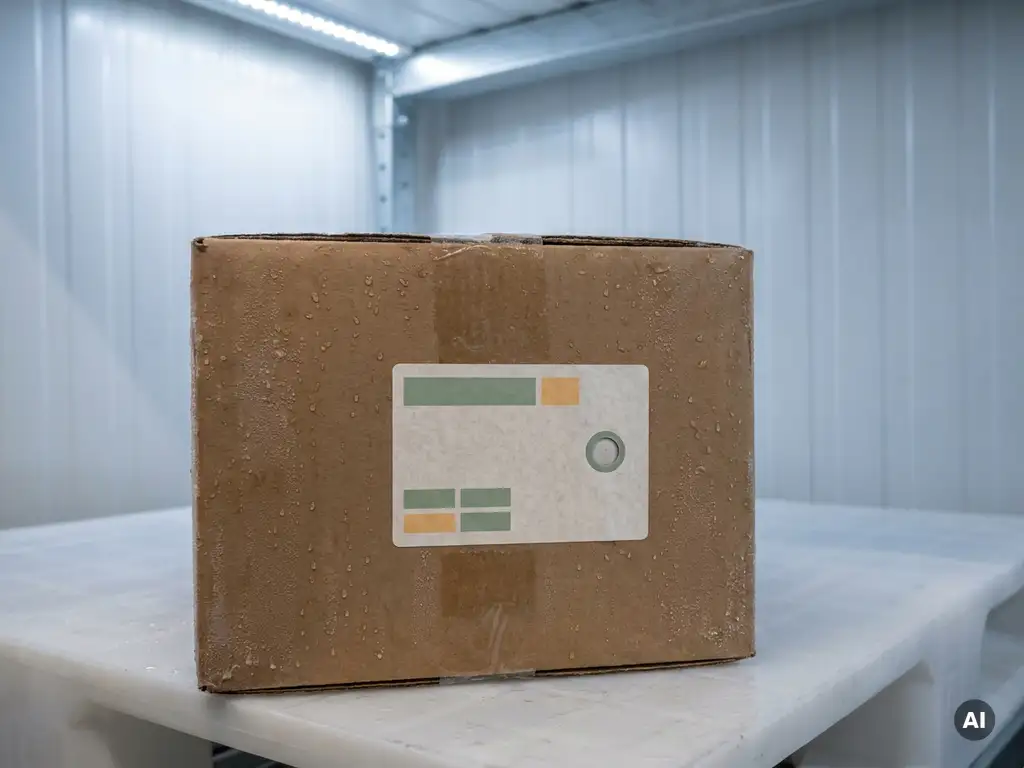
The best data logger for cold chain shipments is one that accurately records temperature throughout transit, is easy to read at the point of delivery, and fits the operational and environmental priorities of your supply chain. For most shippers in 2026, that means weighing three options: single-use electronic loggers, reusable electronic loggers, and paper-based loggers. The sections below break down what to look for and how these options compare.
What makes a data logger suitable for cold chain shipments?
A temperature data logger is suitable for cold chain shipments when it reliably records temperature within the required range, is robust enough to survive transit conditions, and allows the receiving party to access data quickly without specialist equipment. Accuracy, durability, and ease of data retrieval are the three non-negotiable criteria for any cold chain application.
Beyond those basics, a few practical factors separate good loggers from great ones:
- Temperature range: The logger must cover the full range your product requires, whether that is frozen goods at -30°C or ambient shipments up to 50°C.
- Battery performance: The battery must last the entire journey without needing recharging or replacement mid-transit.
- Data accessibility: Both the sender and the receiver should be able to retrieve temperature records without friction, special software, or dedicated hardware.
- Transport compatibility: The logger should be safe and functional across road, sea, air, and rail, including compliance with aviation battery restrictions.
- Waterproofing: Cold chain environments often involve condensation, ice, and moisture, so physical protection matters.
The right logger balances all of these factors against the volume of shipments you handle and the sustainability commitments your organization has made.
What types of data loggers are used in cold chain logistics?
Three main types of data loggers are used in cold chain logistics: single-use electronic loggers, reusable electronic loggers, and paper-based loggers. Each has a distinct form factor, retrieval method, and end-of-life profile.
Single-use electronic loggers
These are the most widely used option in the industry. Built from plastic and electronics with a lithium battery, they travel with the shipment and are discarded after one use. Data is typically retrieved via USB or Bluetooth. More than 80 million of these devices are discarded globally each year, requiring e-waste disposal streams that many organizations struggle to manage consistently.
Reusable electronic loggers
Reusable loggers are also plastic- and electronics-based, but they are designed for multiple trips and carry a rechargeable battery. They reduce per-shipment waste compared to single-use devices, but they require a reverse logistics process to bring them back to the sender after each journey. Eventually, they too become electronic waste. Data retrieval follows the same USB or Bluetooth approach as single-use models.
Paper-based loggers
Tapp has developed the world’s first paper-based data logger that uses NFC technology to deliver temperature records with a simple smartphone tap, no app required. These loggers are built on a paper substrate with a lithium-free battery, making them recyclable through standard paper waste streams globally. Data uploads to the cloud automatically when the label is tapped, giving both sender and receiver access to a complete temperature report.
What is the difference between USB and NFC data loggers?
The key difference between USB and NFC data loggers is how temperature data is retrieved. USB loggers require a physical cable connection to a computer and dedicated software to read and export the data. NFC loggers transmit data wirelessly to any NFC-enabled smartphone with a single tap, requiring no cable, no software, and no dedicated hardware.
This distinction has real operational consequences:
- USB loggers create friction at the point of delivery. The receiver needs access to a compatible computer, the right software installed, and time to connect and download. In some industries, plugging an unknown USB device into a networked computer is a security concern that prevents use entirely.
- NFC loggers remove that friction completely. Any modern smartphone can read the data in seconds, which means warehouse staff, delivery drivers, and quality inspectors can all access temperature records without any infrastructure investment.
For supply chains with multiple international partners and varying levels of technical capability, NFC-based retrieval is significantly easier to scale. There is no training required, no software to install, and no compatibility issues to troubleshoot.
How do sustainability requirements affect data logger choice?
Sustainability requirements are pushing organizations to move away from single-use plastic electronic loggers and toward options with a lower environmental footprint. Electronic data loggers, whether single-use or reusable, require e-waste disposal at end of life, which is increasingly difficult to manage at scale and increasingly scrutinized under corporate ESG reporting frameworks.
Several factors now influence the sustainability profile of a data logger choice:
- Battery chemistry: Lithium batteries in electronic loggers are classified as hazardous waste and require specialist recycling. Paper-based loggers with lithium-free batteries avoid this problem entirely, and their simpler battery design often performs more predictably across the temperature extremes typical of cold chain transit.
- End-of-life pathway: Electronic loggers require e-waste disposal, while paper-based loggers can be recycled through standard paper waste streams globally, making recycling accessible regardless of where a shipment ends up.
- Volume impact: Organizations shipping at high volume amplify whatever environmental footprint their logger choice carries. Switching from plastic to paper-based alternatives at scale produces a measurable reduction in waste generation.
- Scope 3 reporting: For companies tracking emissions and waste across their supply chain, the type of monitoring device used is a concrete lever that sustainability teams committed to reducing waste can act on without disrupting core logistics operations.
In 2026, sustainability requirements are no longer a secondary consideration. For many quality managers and supply chain leads, the environmental profile of a temperature data logger is now part of the procurement decision alongside accuracy and cost.
How Tapp’s paper-based loggers answer these questions in practice
Tapp’s paper-based temperature data loggers are built specifically to address the limitations that make traditional electronic loggers difficult to use at scale. Here is what that looks like in practice:
- Temperature range: Monitors shipments between -30°C and 50°C, covering frozen, chilled, and ambient goods.
- No app, no hardware: Any NFC-enabled smartphone taps the label to retrieve a full temperature report instantly.
- Automatic cloud upload: Data is uploaded the moment the label is read, giving both sender and receiver access to the same report without any manual steps.
- Lithium-free battery: Avoids hazardous battery classification and performs reliably across cold chain temperature ranges.
- Standard paper recycling: Recyclable through paper waste streams globally, eliminating the e-waste challenge entirely.
- Universal transport compatibility: Waterproof coating and a flight-safe battery make the labels suitable for road, sea, air, and rail.
If you are evaluating temperature monitoring options for your supply chain and want to see how a paper-based approach fits your specific shipment profile, book an intro call with a cold chain expert to discuss your needs.
Frequently Asked Questions
How do I know if my cold chain shipments actually need a data logger, or is visual inspection enough?
Visual inspection alone cannot confirm whether a product has experienced a temperature excursion during transit — a package can look perfectly intact while its contents have been compromised. Regulatory bodies such as the FDA, EMA, and WHO require documented temperature records for pharmaceutical, biotech, and many food shipments, meaning a data logger is not optional in those sectors. Even outside regulated industries, a logger provides the evidence needed to resolve disputes with carriers or customers and to identify recurring weak points in your cold chain.
What should I do if the temperature log shows an excursion occurred during transit?
First, do not automatically reject or dispose of the shipment — record the excursion data and escalate it to your quality team before making any product disposition decision. Most quality protocols require you to compare the logged excursion against your product’s Mean Kinetic Temperature (MKT) limits or stability data to determine whether the goods are still within specification. Having a cloud-accessible temperature report, as provided by NFC-based loggers, speeds this process significantly because both the sender and receiver can review the same data simultaneously without waiting for files to be transferred.
Are paper-based data loggers as accurate as traditional electronic loggers?
Yes — accuracy is determined by the sensor and firmware design, not the substrate the logger is built on. Paper-based loggers like those from Tapp use the same fundamental sensing principles as plastic electronic loggers and are validated to the same temperature recording standards. The key advantage is that the paper substrate and lithium-free battery simplify end-of-life handling without any trade-off in measurement reliability across the -30°C to 50°C cold chain range.
What happens if the receiving party doesn't have an NFC-enabled smartphone?
Most modern smartphones — both Android and iOS — have been NFC-enabled as standard for several years, so this is rarely a practical barrier in real-world operations. If a specific receiving location uses older hardware, the sender can still access the full temperature report via the cloud dashboard the moment the label is tapped anywhere along the journey, including at an intermediate checkpoint. It is worth confirming NFC capability with key international partners during onboarding, but in practice this is a much lower hurdle than ensuring every receiving site has compatible USB software installed.
How do I make the business case internally for switching from single-use electronic loggers to a paper-based alternative?
The strongest business case combines three arguments: operational efficiency (no USB cables, no software, no IT security concerns at point of delivery), sustainability compliance (elimination of e-waste and hazardous battery disposal, directly supporting Scope 3 reporting goals), and total cost of ownership (removing the hidden costs of e-waste management and reverse logistics). Quantify the number of loggers your organization discards annually — at industry scale, this often runs into tens of thousands of units — and use that figure to illustrate the waste reduction impact. Presenting this to both procurement and sustainability stakeholders together typically accelerates internal approval.
Can I use the same data logger across different transport modes — air, sea, and road — within a single shipment?
Yes, but you need to confirm that the logger you choose is certified for aviation use before it goes anywhere near an air freight consignment. Many electronic loggers contain lithium batteries that are subject to IATA Dangerous Goods Regulations, which can create compliance issues or outright rejection at air cargo check-in. Loggers with lithium-free batteries, such as Tapp’s paper-based labels, are flight-safe by design and can travel across road, sea, air, and rail within the same journey without any reclassification or documentation burden.
How many data loggers should I place in a single shipment, and where?
The number and placement of loggers depends on the size of the shipment and where temperature variation is most likely to occur — typically near the walls, top, and corners of a pallet or container, rather than at the thermal core. For a standard pallet shipment, one to four loggers placed at the warmest anticipated zones (usually the top corners) is a common industry practice, though regulated industries like pharmaceuticals often have specific mapping requirements defined in their distribution protocols. If you are unsure, a thermal mapping study of your packaging configuration will identify the critical monitoring points and give you a defensible placement rationale.