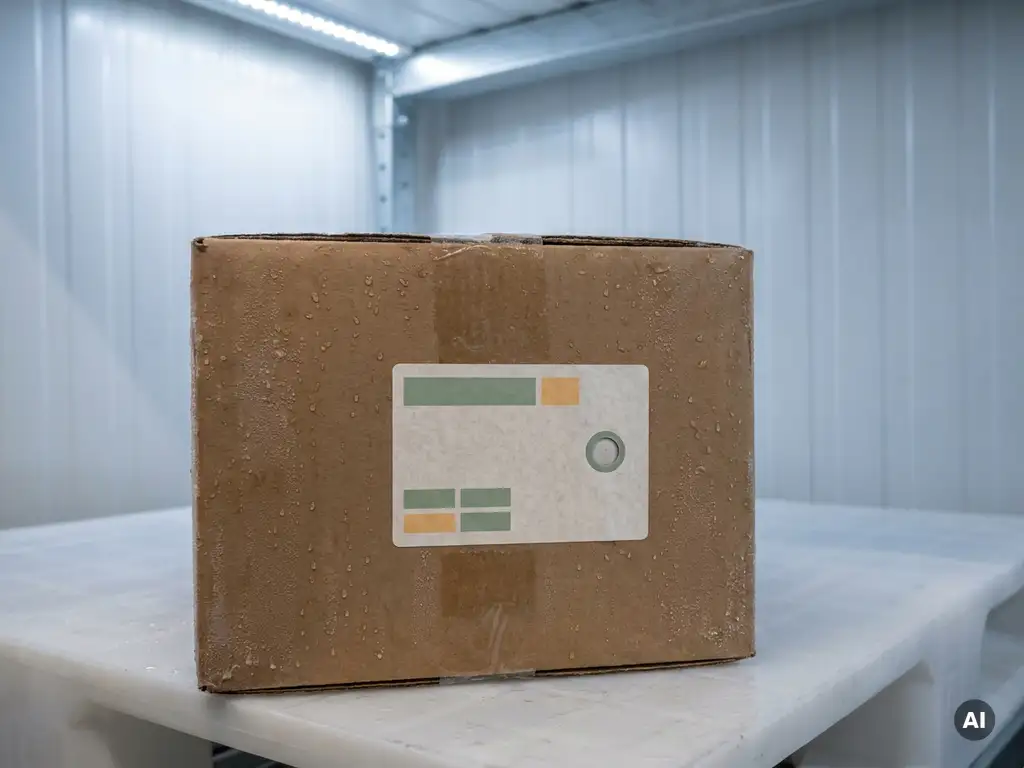
For long-haul international shipping, the best temperature data logger combines certified accuracy, broad transport compatibility, and a retrieval method that works for everyone in the supply chain without requiring dedicated hardware. In 2026, the clearest distinction is no longer just between brands but between fundamentally different logger types: traditional electronic loggers and newer paper-based alternatives. The sections below break down the key questions supply chain teams ask when choosing the right solution.
What features matter most in a data logger for international shipments?
The most important features in a temperature data logger for international shipments are a wide temperature measurement range, durability across transport conditions, compatibility with multiple shipping modes, and a data retrieval method that works for any receiving party regardless of their technical setup. Without these, even a technically accurate logger can create bottlenecks at the destination.
Long-haul shipments face conditions that short domestic routes simply do not. A container crossing the Pacific may experience humidity fluctuations, vibration, and significant temperature swings before it reaches port. A logger used in this environment needs a waterproof or moisture-resistant design and a battery that remains stable across that full journey.
Data retrieval is often overlooked during the selection process, but it becomes the most visible pain point in practice. If a receiving party needs a USB cable, proprietary software, or a dedicated reader to access temperature records, delays and friction are almost guaranteed. The ideal logger delivers data instantly to anyone with a standard device, no infrastructure required.
Other features worth prioritizing include:
- Wide measurement range to cover frozen, chilled, and ambient cargo categories
- Automatic cloud upload so both sender and receiver can access the same temperature report without manual file transfers
- Flight-safe battery for air freight compatibility
- Customizable logging intervals to match the duration and sensitivity of the shipment
What’s the difference between USB and NFC-based temperature data loggers?
The key difference between USB and NFC-based temperature data loggers is how data is retrieved at the destination. USB loggers require a physical cable connection and software installed on a computer to download records. NFC-based loggers transfer data wirelessly with a single smartphone tap, with no cable, no software, and no dedicated hardware needed.
This distinction has practical consequences throughout the supply chain. With USB loggers, the receiving party must have the right software, the right cable, and often a computer that is permitted to connect external devices. In pharmaceutical environments particularly, IT security policies frequently block USB connections to networked computers entirely, making USB loggers impractical regardless of their technical accuracy.
NFC-based loggers remove that dependency. Any NFC-enabled smartphone can read the logger instantly. This matters enormously in international shipping, where the receiving party may be a distributor, a customs agent, or an end customer with no obligation to invest in specialized reading equipment.
There is also a data flow difference. Many USB loggers produce a local file that must then be manually uploaded or emailed. NFC-based loggers that integrate with cloud platforms can push the temperature report automatically the moment the label is tapped, giving both sender and receiver access to the same data simultaneously.
Are paper-based data loggers accurate enough for professional cold chain use?
Yes, paper-based data loggers are accurate enough for professional cold chain use. The most capable paper-based loggers on the market are EN12830 certified, the same standard applied to traditional electronic loggers, and they monitor temperatures across a range of -30°C to 50°C, covering the full spectrum from deep-frozen to ambient shipments.
The assumption that paper means less reliable stems from conflating the substrate with the sensor technology. A paper-based logger uses the same underlying temperature sensing logic as its plastic counterpart. The paper is the carrier, not the measurement mechanism. What changes is the form factor, the environmental footprint, and the retrieval method, not the data quality.
Battery performance is another area where paper-based loggers often outperform their single-use plastic equivalents. Traditional single-use electronic loggers use lithium batteries that can be sensitive to the very temperature extremes they are meant to record, occasionally affecting performance in deep-freeze or high-heat environments. Paper-based loggers are designed with lithium-free battery technology that is optimized specifically for passive logging across the full journey duration, making them reliably stable even in demanding cold chain conditions.
For quality managers evaluating paper-based options, the practical test is straightforward: check for EN12830 certification, verify the temperature range covers your product category, and confirm the logging interval is configurable to match your transit time.
How do you reduce data logger waste in international supply chains?
The most effective way to reduce data logger waste in international supply chains is to switch from single-use electronic loggers to either reusable electronic loggers or paper-based alternatives. Each approach reduces waste differently, and the right choice depends on shipment volume, route complexity, and whether return logistics are feasible.
To understand the scale of the problem: an estimated 80 million single-use plastic electronic loggers are discarded globally each year. Each one contains a circuit board, a lithium battery, and a plastic housing, all of which require e-waste disposal. In many destination countries, proper e-waste infrastructure simply does not exist, meaning these loggers are incinerated or landfilled.
Reusable electronic loggers
Reusable loggers reduce waste per shipment because a single device makes multiple trips before it reaches the end of life. The trade-off is logistics: the logger must be returned to the sender after each use, which adds complexity and cost to international routes. If a logger is lost, damaged, or delayed at customs, the entire system breaks down. Reusable loggers also eventually become e-waste themselves.
Paper-based loggers
Paper-based loggers take a different approach entirely. Rather than trying to extend the life of a plastic device, they eliminate the plastic and the lithium battery from the equation. Tapp’s world’s first paper-based data logger, for example, are made from agricultural waste paper and use a lithium-free design, which means they can be recycled through standard paper waste streams globally, with no e-waste designation required. There is no return logistics burden, and no specialized disposal infrastructure needed at the destination.
For international supply chains where return logistics are impractical or where ESG reporting requires measurable waste reduction, paper-based loggers offer the most straightforward path to reducing the environmental footprint of cold chain monitoring.
How Tapp helps with temperature monitoring in international shipping
Tapp has developed the world’s first paper-based temperature data logger, combining certified cold chain accuracy with a design that eliminates e-waste and removes barriers to data access. For teams managing long-haul international shipments, this means a monitoring solution that works end to end without requiring anything from the receiving party except a smartphone.
Here is what Tapp’s paper-based data loggers provide in practice:
- EN12830-certified accuracy across a -30°C to 50°C range, covering frozen, chilled, and ambient cargo
- NFC tap retrieval with no app, no cable, and no software required at the destination
- Automatic cloud upload to the TappOS dashboard the moment the label is tapped, giving both sender and receiver access to the same temperature report
- Lithium-free, paper-based construction made from agricultural waste paper, recyclable through standard paper waste streams worldwide
- Universal transport compatibility with a waterproof coating and flight-safe battery for road, sea, air, and rail shipments
If your team is looking to simplify cold chain monitoring while meaningfully reducing your supply chain’s environmental footprint, get in touch with Tapp or book an intro call with an expert to find out how paper-based logging fits your shipping routes.
Frequently Asked Questions
How long can a paper-based temperature data logger run on a single charge for ultra-long international routes?
Most high-quality paper-based loggers are designed to cover journeys of up to 90 days on a single battery cycle, which is more than sufficient for the longest ocean freight routes. Because they use lithium-free battery technology optimized specifically for passive, continuous logging, they tend to maintain stable performance across that full duration without the power drain risks associated with traditional lithium batteries in extreme temperatures. Always confirm the stated battery life against your specific transit time and logging interval before deploying on ultra-long hauls.
Can a temperature data logger be used across multiple shipping modes in a single journey, such as air freight followed by road transport?
Yes, provided the logger is designed for multimodal compatibility. The key requirements are a flight-safe battery (to comply with IATA dangerous goods regulations for air freight) and a waterproof or moisture-resistant housing to withstand the humidity and condensation changes that occur when cargo transitions between environments. Loggers that meet both criteria can travel uninterrupted from a warehouse to an aircraft hold to a refrigerated truck without needing to be swapped out at each handoff, which preserves a continuous, unbroken temperature record across the entire journey.
What happens if the temperature logger records an excursion — how should supply chain teams respond?
When an excursion is detected, the first step is to retrieve the full temperature report immediately and document the exact time window, duration, and magnitude of the breach before any product decisions are made. For regulated products like pharmaceuticals or food, this report should be escalated to a quality manager who can perform a formal excursion assessment, often referencing product-specific stability data to determine whether the goods are still fit for use. Having the temperature data accessible via an automatic cloud dashboard — rather than locked in a local file — significantly accelerates this process, since both the sender and receiver can review the same report simultaneously without waiting for manual file transfers.
Are paper-based data loggers accepted by regulatory bodies and customs authorities for pharmaceutical or food shipments?
Yes, as long as the logger carries the relevant certification for your industry. For cold chain monitoring, EN12830 is the key standard, and paper-based loggers that are EN12830-certified produce records that carry the same regulatory weight as those from traditional electronic loggers. For pharmaceutical shipments specifically, GDP (Good Distribution Practice) guidelines focus on the integrity and traceability of the temperature data, not the physical format of the logger itself. It is always advisable to verify acceptance with your specific regulatory market or freight forwarder, but certification-backed paper-based loggers are increasingly recognized across major trade routes.
How do I configure the logging interval, and what interval should I choose for my shipment?
Logging interval configuration is typically done before the logger is activated, either through a web platform or a setup tool provided by the manufacturer. The right interval depends on two factors: the total transit duration and how temperature-sensitive your product is. For shorter, high-sensitivity shipments such as air freight pharmaceutical runs, a 5- to 15-minute interval captures granular detail that is useful for excursion analysis. For longer ocean freight routes lasting several weeks, a 30- to 60-minute interval is usually sufficient and prevents the data file from becoming unnecessarily large. When in doubt, align your interval with the excursion response window specified in your product’s stability documentation.
What is the most common mistake companies make when switching from USB loggers to NFC-based loggers?
The most common mistake is underestimating the change management required at the receiving end. Teams often focus on the technical switch but forget to inform distributors, customs agents, or end customers that data retrieval now happens via a smartphone tap rather than a cable and computer. A brief one-page instruction or a short onboarding email to receiving parties eliminates virtually all confusion at the destination. The second common mistake is failing to test NFC compatibility across the smartphone models used by receiving partners — while NFC is standard on most modern Android and iPhone devices, some older or budget devices may require a specific tap position or a settings adjustment to read NFC tags reliably.
How do paper-based loggers fit into ESG reporting for supply chain sustainability goals?
Paper-based loggers contribute directly to measurable ESG metrics in two ways: waste reduction and materials sourcing. Because they eliminate the circuit board, lithium battery, and plastic housing of a traditional single-use logger, each unit deployed represents a quantifiable reduction in e-waste generated per shipment — a figure that can be aggregated annually and reported against waste diversion or circular economy targets. Loggers made from agricultural waste paper and recyclable through standard paper waste streams also support materials sustainability narratives in supplier and investor ESG disclosures. For supply chain teams under pressure to demonstrate Scope 3 emissions and waste reductions, switching to paper-based loggers is one of the few cold chain changes that produces both an operational benefit and a directly reportable environmental metric.