For small and mid-sized businesses, the best temperature data logger is one that is accurate, easy to use, and affordable without requiring expensive infrastructure. Paper-based loggers have emerged as a strong option in 2026, combining professional-grade monitoring with a dramatically lower environmental footprint. Below, the key questions businesses typically ask before choosing a solution are answered directly.
What features matter most in a temperature data logger?
The most important features in a temperature data logger are measurement accuracy, ease of data retrieval, compatibility with your shipment types, and total cost of use. For small and mid-sized businesses in particular, simplicity and low overhead matter as much as technical performance, since most teams do not have dedicated logistics IT resources.
When evaluating options, focus on these core features:
- Measurement range and accuracy: Make sure the logger covers the temperature range your products require, whether that is frozen goods, chilled produce, or ambient-sensitive items like paint or seeds.
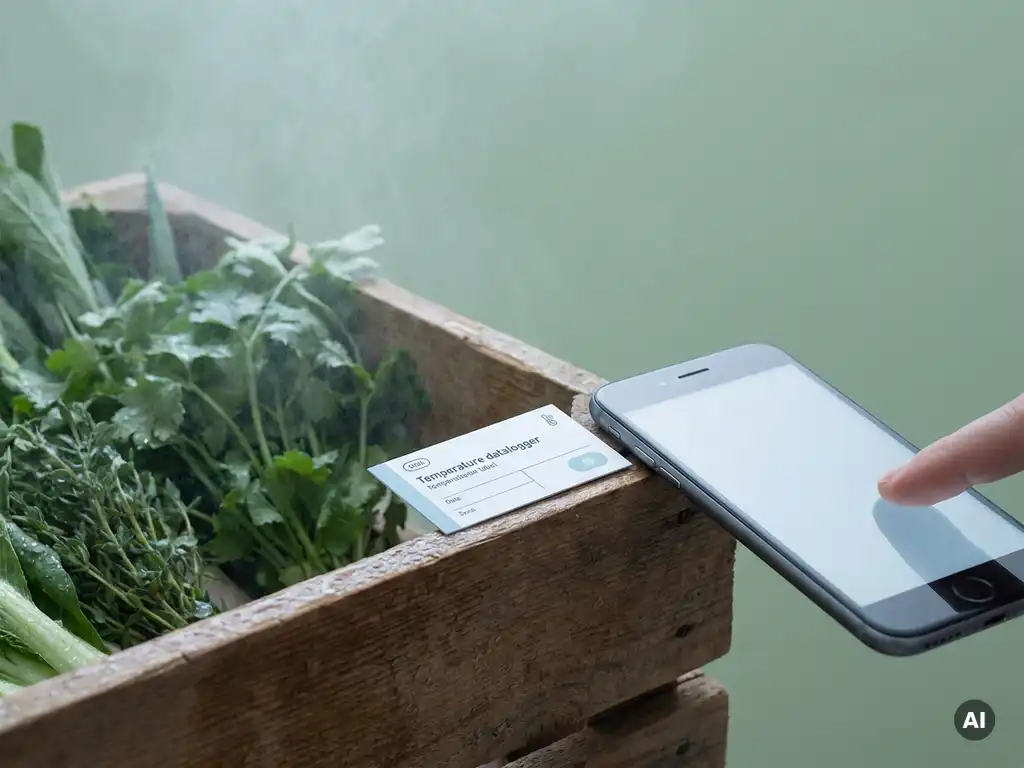
- Data retrieval method: USB and Bluetooth loggers require dedicated hardware or software. NFC-based loggers allow any smartphone to read the data instantly, with no app or equipment needed.
- Cloud reporting: Automatic data upload means both sender and receiver can access temperature reports without manual file transfers or email chains.
- Battery reliability: A logger that fails mid-shipment is worse than no logger at all. Look for stable, long-lasting power sources suited to the full duration of your typical transit.
- Environmental impact: Disposable loggers generate significant waste. Understanding how a logger is disposed of at end of life matters increasingly for businesses with sustainability goals and environmental mission.
What types of temperature data loggers are available?
There are three main types of temperature data loggers available: single-use electronic loggers, reusable electronic loggers, and paper-based loggers. Each type differs significantly in cost structure, retrieval method, and environmental impact.
Single-use electronic loggers
These are the industry standard. They are made from plastic and electronics with a lithium battery, designed for one shipment and then discarded. Data is typically retrieved via USB or Bluetooth. More than 80 million of these are discarded globally every year, and they require e-waste disposal, which adds cost and complexity for businesses trying to reduce their environmental footprint.
Reusable electronic loggers
Reusable loggers are also plastic- and electronics-based but come with rechargeable batteries. They are designed for multiple trips, which reduces per-use cost over time. However, they still require USB or Bluetooth data retrieval, and eventually reach end of life as e-waste. They also require a return logistics process, which adds operational overhead for smaller businesses.
Paper-based loggers
As the only provider of the world’s first paper-based data logger, Tapp has developed a fundamentally different approach. These loggers use a paper substrate with a lithium-free battery, making them recyclable through standard paper waste streams globally. Data is accessed via a simple NFC smartphone tap, with no app required, and automatically uploads to the cloud. The lithium-free battery design also offers a meaningful advantage over single-use plastic alternatives: without the chemical degradation risks associated with lithium cells, these batteries maintain stable performance across the full temperature range of a shipment, including cold environments where lithium batteries are known to underperform.
How much does temperature monitoring cost for a small business?
For small and mid-sized businesses, temperature monitoring costs depend on shipment volume, logger type, and whether any hardware investment is required. The total cost of use, not just the unit price, is the most useful figure to calculate.
Single-use electronic loggers typically carry a moderate unit cost, but that price does not include the time spent on USB downloads, software management, or e-waste disposal. Reusable loggers have a higher upfront cost but spread that over multiple trips, though they require return shipping and charging infrastructure. Paper-based loggers eliminate infrastructure costs entirely since any NFC-enabled smartphone acts as the reader, and they are recycled through existing paper waste streams rather than specialist e-waste channels.
For businesses shipping lower volumes, the absence of hardware investment is particularly valuable. There is no reader device to purchase, no software license to maintain, and no IT setup required on the receiving end. This makes paper-based loggers especially cost-effective for smaller operations where every overhead matters.
Which temperature data logger is best for small and mid-sized businesses?
For most small and mid-sized businesses, a paper-based temperature data logger offers the best combination of simplicity, cost efficiency, and sustainability. It requires no infrastructure on either end of the shipment, works with any modern smartphone, and eliminates the need for e-waste disposal processes that add hidden cost and complexity.
Electronic loggers, whether single-use or reusable, require either dedicated retrieval hardware or a return logistics process. For businesses without large logistics teams, these requirements create friction. Paper-based loggers sidestep those issues entirely while still delivering accurate, cloud-accessible temperature data for every shipment.
How Tapp’s paper-based loggers help small and mid-sized businesses
Tapp’s paper-based temperature data loggers are designed specifically to remove the barriers that make traditional monitoring difficult for smaller operations. Here is what that means in practice:
- No hardware needed: Any NFC-enabled smartphone reads the label instantly, so neither sender nor receiver needs to invest in equipment.
- Automatic cloud reporting: The moment a label is tapped, temperature data uploads to the TappOS dashboard, giving both parties access to a complete shipment report.
- Lithium-free battery: The battery performs reliably across the full monitoring range of -30°C to 50°C, including cold environments where lithium cells can struggle.
- Recyclable through standard paper waste: No e-waste disposal required. Labels go into the paper recycling stream, reducing environmental impact by up to 90% compared to plastic loggers.
- Works across all transport modes: Road, sea, air, and rail shipments are all supported, with a waterproof coating and a flight-safe battery.
If you are looking for a temperature monitoring solution that is simple to deploy, easy to scale, and aligned with modern sustainability expectations, explore Tapp’s paper-based loggers and request an intro call with an expert for your next shipment.
Frequently Asked Questions
How do I get started with paper-based temperature data loggers for my first shipment?
Getting started is straightforward: request a sample from Tapp, attach the label to your shipment as you would any standard label, and the logger begins recording automatically. No software installation, hardware setup, or staff training is required on either end. Your recipient simply taps the label with any NFC-enabled smartphone to instantly access the full temperature report in the cloud.
What happens if the recipient's phone doesn't support NFC — can they still access the temperature data?
NFC is a standard feature on the vast majority of modern Android and iOS smartphones, so this is rarely an issue in practice. However, if a recipient’s device does not support NFC, the sender can still access the complete shipment report through the TappOS cloud dashboard and share it directly — meaning temperature records are never locked behind a single point of access.
How accurate are paper-based loggers compared to traditional electronic ones?
Paper-based loggers from Tapp deliver professional-grade measurement accuracy across their full operating range of -30°C to 50°C, comparable to standard single-use electronic loggers. A key advantage is battery stability: because Tapp’s loggers use a lithium-free battery, they avoid the performance degradation that lithium-based cells can experience in cold environments, which means readings remain reliable throughout the entire shipment rather than only in ambient conditions.
Can I use paper-based temperature loggers for regulated industries like pharmaceuticals or food logistics?
Yes — paper-based loggers are suitable for temperature-sensitive industries including food, pharmaceuticals, and life sciences, provided the logger’s accuracy and reporting capabilities meet your specific regulatory requirements. The automatic cloud reporting feature in TappOS generates a complete, timestamped temperature record for each shipment, which supports documentation and traceability needs. It is always advisable to verify that any logger you choose aligns with the specific compliance standards applicable to your industry, such as GDP guidelines for pharmaceuticals.
What's the biggest mistake small businesses make when choosing a temperature data logger?
The most common mistake is evaluating loggers on unit price alone, without accounting for the total cost of use. Hidden costs — such as USB reader hardware, software licenses, return shipping for reusable devices, IT support, and e-waste disposal fees — can significantly increase the real per-shipment cost of electronic loggers. For small and mid-sized businesses, choosing a solution with zero infrastructure requirements on both ends often delivers better overall value even if the unit price appears similar.
How should I handle a shipment where the temperature log shows an excursion?
If the temperature report reveals an excursion — meaning the product went outside its required range — the first step is to document the breach immediately using the cloud report as your timestamped record. Then assess whether the product is still safe or compliant based on your industry guidelines or supplier specifications, and notify the relevant parties (supplier, customer, or regulatory body) with the report attached. Having an automatic, tamper-evident cloud record makes this process significantly faster and more defensible than manually downloaded data.
Are paper-based loggers durable enough for long-haul or international shipments?
Yes — Tapp’s paper-based loggers feature a waterproof coating that protects them from moisture and condensation, which is particularly important for refrigerated or frozen shipments. They are also compatible with all major transport modes, including road, sea, air, and rail, and the lithium-free battery is flight-safe, removing the restrictions that apply to some lithium-based devices in air freight. For international shipments, the cloud-based reporting also means customs agents or overseas recipients can access temperature data instantly without any local software or equipment.