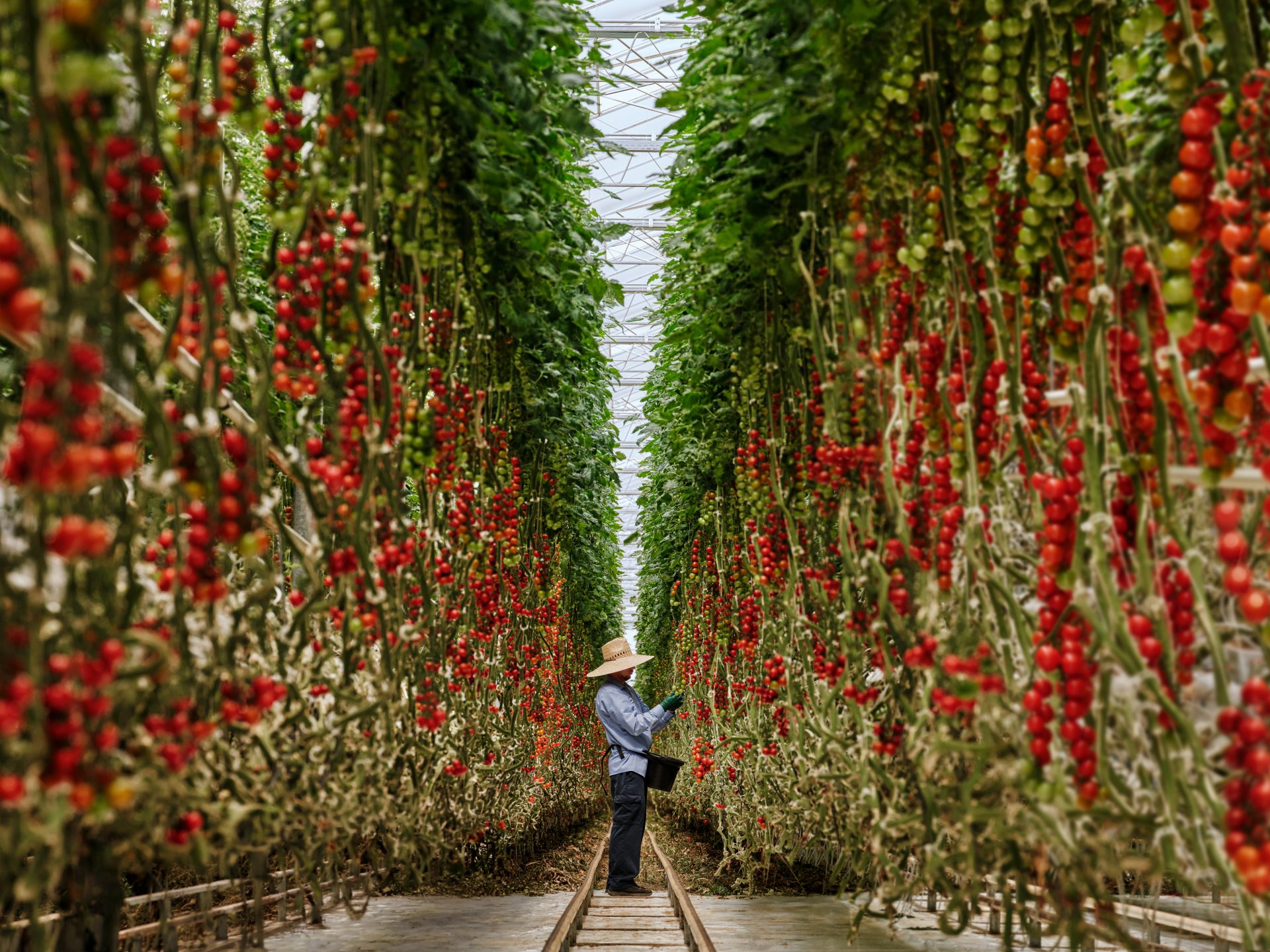
Nature Fresh Farms grows and ships over 300 million pounds of greenhouse produce across North America each year. But for tomatoes, peppers, cucumbers, strawberries and lettuce, the journey doesn’t end at harvest. “Produce quality is our priority at every stage,” says Meaghan O’Brien, Senior Communications Manager, Nature Fresh Farms. “Tapp adds another layer of cold chain visibility and quality assurance.”
Growing with care, shipping at scale
Founded in 1999, the family-owned business has grown into one of North America’s largest vertically integrated greenhouse produce companies, operating across Canada, the US, and Mexico.
The transit process is a multi-stage relay. “Some of the produce picked in Mexico is packaged and loaded onto trucks, typically reaching our facility in Laredo, Texas, within one to two days,” explains Jeff Simpson, Senior Shipping and Receiving Manager at the Leamington facility. After Nature Fresh Farms receives the shipment in Laredo, it travels by road to their main distribution center in Leamington, Ontario, where monitored transit to customers begins.
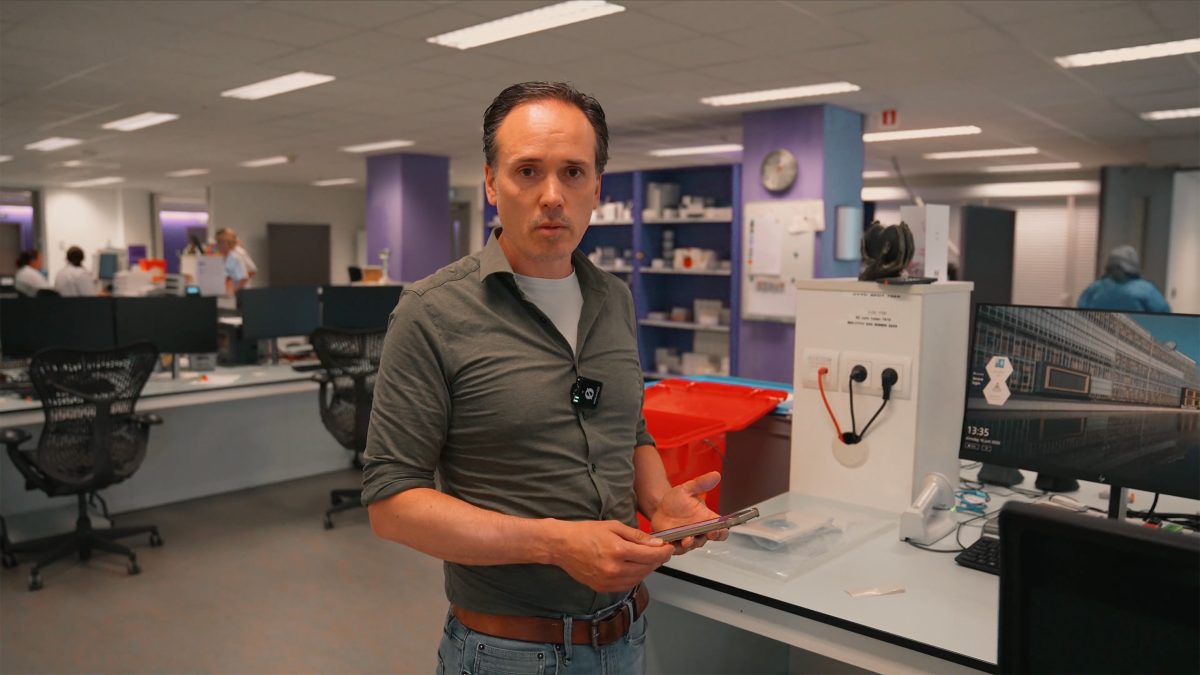
“We activate a Tapp logger in Laredo and send it with the shipment to Canada,” Jeff says. “When it arrives, my team retrieves it, stops it, and checks the data.”
Inside its own facilities, Nature Fresh Farms maintains strict climate control. On the road, however, third-party carriers handle transportation. “The carrier is responsible for maintaining temperatures in transit,” Jeff notes. “Our responsibility is making sure they do.”
Eliminating the transit blind spot
As the business scaled, Quality Assurance identified transit visibility as a key gap. “Having access to reliable data helps us understand the conditions products experience along the way,” Jeff says. “It allows us to determine whether temperature fluctuations occurred in transit and continually improve how we protect product quality.”
When searching for a solution, Nature Fresh Farms intentionally ruled out single-use loggers. “We didn’t want something we had to throw away after every trip,” says Joe Piorro, Site Manager of the company’s Leamington Distribution Center, who oversees warehouse operations there. “Our logistics team tested several options, and Tapp was the best fit for our workflow.”
A simple, visual workflow
Today, the loggers are tied into a straightforward routine between Laredo and Leamington. In Laredo, workers place a logger on the final pallet alongside a bright ‘Tapp Logger’ marker. The team takes a quick photo of the pallet and posts it in Microsoft Teams, letting the Canadian receiving team know exactly where to look.
Upon arrival in Leamington, the receiving team hands the logger directly to a supervisor to stop the recording. The system gives instant visual feedback, flagging out-of-range temperatures with a red spike or a sad-face icon.
“I like the little sad faces that pop up when a shipment is out of compliance,” Jeff smiles. “You instantly know if something isn’t right. If the supervisor sees that warning, it’s flagged immediately to Quality Assurance or management so we can check the product temperature on the spot.”
Data-backed accountability
Having independent transit data has changed how Nature Fresh Farms manages carrier relationships. In the past, the company relied largely on temperature downloads provided by the carrier’s own refrigeration systems.
“When our QA team identifies a potential temperature concern during inspection,”Joe says, “that’s when we go back to the Tapp data. It gives us way more visibility and control. When we talk to a carrier about a claim, we have independent proof to back it up. It has helped the company reduce potential losses.”
Beyond claims, the data provides an operational learning loop. If produce degrades unexpectedly early, the team reviews the temperature history to see if the cold chain was broken. “Even if it doesn’t lead to a claim, identifying where things went wrong gives us actionable feedback for next time,” Joe adds.
Closed-loop sustainability
The operational practicalities matter just as much on the warehouse floor. “The system is very easy to use,” Jeff notes. “We set our own temperature parameters, download reports as PDFs or Excel files, and send them straight to procurement without needing extra app logins.”
Even though the loggers travel with third-party carriers between Laredo and Leamington, Nature Fresh Farms has built a closed loop around them: the Leamington team collects 25 to 30 used loggers in a box and ships them back to Laredo, ready to go out again on the next shipment.
“The reusable aspect is a real benefit,” Jeff says. “We can stop the loggers, read them, and send them back to be used again rather than throwing electronic waste into the garbage.”
Confidence beyond the greenhouse
Nature Fresh Farms already controls growing conditions inside its greenhouses with precision. Data logging extends that control across the supply chain, turning assumptions into clear evidence.
For Meaghan, that visibility reinforces customer trust. “Confidence and trust are critical in today’s market,” she says. “It’s another way we can show customers the care that goes into their produce, all the way from the greenhouse to their door.”
Bring independent insight to your cold chain
Want to know what happens to your products after they leave your facility? Discover how Tapp can make temperature data easier to access, share and act on.