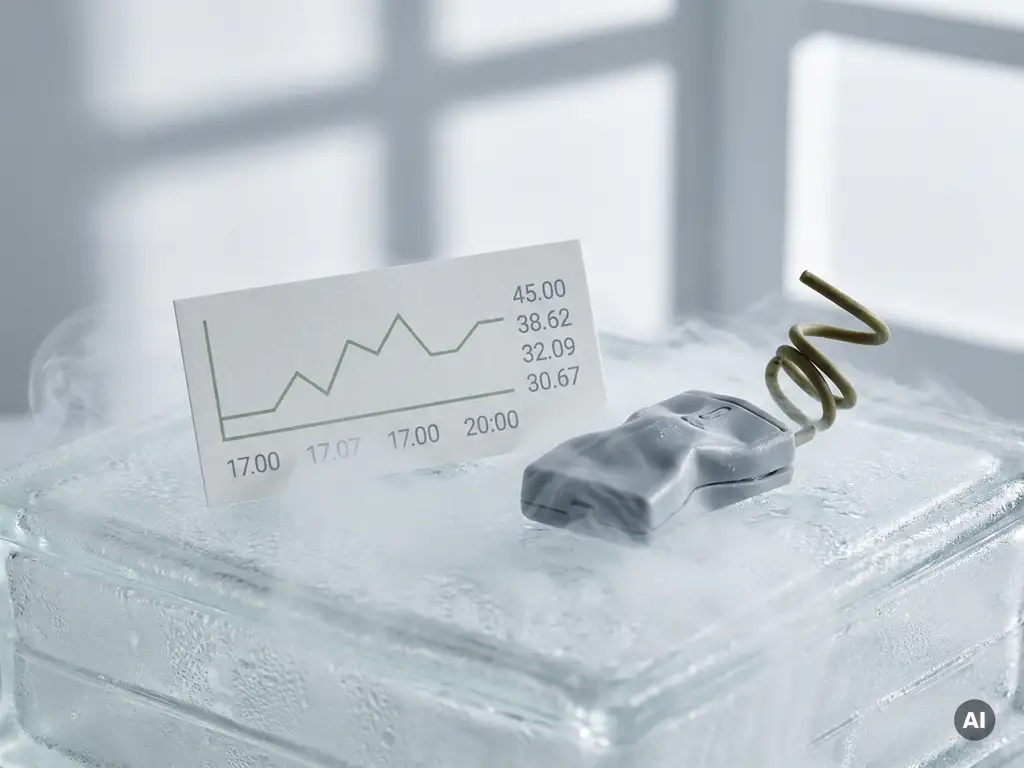
Most data loggers can travel by air without special approval, but it depends entirely on the battery type inside the device. Electronic data loggers that contain lithium batteries are subject to aviation safety restrictions and may require documentation, quantity limits, or carrier approval before they can be loaded onto an aircraft. Lithium-free alternatives face none of these restrictions.
For quality managers shipping temperature-sensitive goods by air, understanding this distinction is essential. The sections below break down why lithium batteries trigger aviation rules, what a lithium-free option means in practice, and what to look for when selecting a data logger for air freight.
What regulations apply to data loggers on aircraft?
Data loggers that contain lithium batteries are classified as dangerous goods under international aviation guidelines. This means electronic data loggers, whether single-use or reusable, typically fall under restrictions that govern how many units can travel per shipment, how they must be packaged, and whether the carrier requires advance notification or documentation.
The core concern is fire risk. Lithium cells, if damaged, defective, or improperly stored, can enter a state called thermal runaway, which generates intense heat that is difficult to extinguish mid-flight. Aviation authorities treat this as a serious hazard, which is why lithium-containing devices face stricter handling requirements than most other cargo.
Data loggers that contain no lithium, by contrast, do not fall into the dangerous goods category for battery-related reasons. This makes a meaningful difference for operations that ship frequently by air, where managing documentation for every individual logger adds time, cost, and administrative overhead.
Why are lithium batteries the main concern for air freight?
Lithium batteries are the primary concern for air freight because of their chemical instability under stress. Unlike alkaline or zinc-based cells, lithium cells store a large amount of energy in a compact form, and when that energy is released uncontrollably, the results can be severe. Aviation environments, with pressure changes and vibration, increase the risk of battery stress during transport.
This is not a theoretical concern. There have been documented incidents involving lithium battery fires in cargo holds, which is why aviation authorities worldwide have tightened their approach to lithium-containing shipments over time. Even small consumer-grade lithium cells in devices like data loggers are subject to these rules.
For quality managers, this creates a practical problem. If a shipment includes dozens or hundreds of electronic data loggers, each containing a lithium cell, the cumulative documentation and compliance burden can be significant. Some carriers impose unit limits per package or per flight, which can disrupt high-volume cold chain operations.
Can a paper-based or lithium-free data logger fly without restrictions?
Yes. A lithium-free data logger does not trigger the battery-related aviation restrictions that apply to standard electronic loggers. Without a lithium cell, the device is not classified as dangerous goods on the basis of its power source, which means it can be included in air freight shipments without the additional documentation, quantity limits, or carrier notifications that lithium-containing devices require.
Tapp’s world’s first paper-based data logger is built on a lithium-free design, which is one of the reasons they are well suited to air freight. Beyond the flight approval question, the battery used in paper-based loggers offers other advantages worth noting:
- No e-waste classification: Because the battery is not lithium-based, the entire logger can be recycled through standard paper waste streams rather than requiring specialist e-waste disposal.
- Stable chemistry: The battery chemistry used does not carry the thermal runaway risk associated with lithium cells, making it inherently safer in transit environments.
- Designed for single-use logistics: Unlike rechargeable lithium packs that degrade over charge cycles, the battery in a paper-based logger is optimized for the duration of a single shipment, maintaining consistent performance without the degradation risk of a worn rechargeable cell.
The result is a logger that is genuinely flight-safe by design, not just within a narrow set of conditions.
What should quality managers check before choosing an air-freight data logger?
Before selecting a data logger for air freight, quality managers should verify four things: whether the logger contains a lithium battery, how data is retrieved at the destination, whether the logger is certified for the temperature range required, and how the device handles end-of-life disposal.
- Battery type: Confirm whether the logger uses lithium chemistry. If it does, factor in the documentation and carrier requirements that come with it. If it does not, verify what battery type is used and whether it performs reliably across the shipment duration.
- Data retrieval method: Electronic data loggers typically require USB connections or Bluetooth-enabled hardware to download temperature records. For receiving parties with limited infrastructure, this creates a barrier. Paper-based loggers that use NFC smartphone tap technology allow any NFC-enabled phone to access the data instantly, with no app required.
- Temperature range and certification: Ensure the logger covers the required temperature range for the specific cargo, whether that is pharmaceuticals, fresh produce, or chemicals. Look for EN 12830 certification as a benchmark for measurement accuracy.
- End-of-life handling: Electronic data loggers, whether single-use or reusable, eventually require e-waste disposal. For high-volume air freight operations, this adds a disposal cost and process. Paper-based loggers that are recyclable through standard paper waste streams remove this burden entirely.
Checking these four factors before committing to a logger type will save significant operational friction, particularly for teams managing frequent international air shipments.
How Tapp makes air freight monitoring simpler
Tapp has developed the world’s first paper-based data logger specifically designed to remove the friction that electronic loggers create in air freight operations. Because the loggers are lithium-free, they travel by air without battery-related restrictions. Because they use NFC technology, receiving parties anywhere in the world can access temperature data with a simple smartphone tap, with no app, no USB cable, and no dedicated hardware required. Data is automatically uploaded to the cloud the moment the label is tapped, giving both sender and receiver a complete temperature report.
Key features relevant to air freight quality managers:
- Lithium-free and flight-safe by design
- NFC smartphone tap for instant data access, no app needed
- Automatic cloud upload to the TappOS dashboard on first tap
- EN 12830-certified accuracy across a temperature range of -30°C to 50°C
- Recyclable through standard paper waste streams globally, no e-waste disposal required
- Compatible with road, sea, air, and rail shipments
If you are looking for a data logger that removes battery restrictions, simplifies data retrieval for international partners, and supports your sustainability targets, book an intro call with an expert to find out how paper-based monitoring fits your air freight operation.
Frequently Asked Questions
How do I know if my current data logger contains a lithium battery?
Check the product datasheet or packaging for battery specifications — lithium cells are typically listed as Li-MnO2, Li-SOCl2, lithium metal, or lithium-ion. If the documentation is unclear, look for a dangerous goods declaration or IATA compliance statement from the manufacturer, as suppliers of lithium-containing loggers are required to disclose this. When in doubt, contact your logger supplier directly and ask specifically whether the device is subject to IATA Dangerous Goods Regulations Section II lithium battery provisions.
What happens if I ship lithium-containing data loggers by air without the correct documentation?
Shipments containing undeclared lithium batteries can be seized by the carrier, returned to the shipper, or result in fines and penalties under IATA Dangerous Goods Regulations. Beyond the immediate disruption to your cold chain shipment, repeat violations can affect your standing with carriers and complicate future bookings. For high-volume air freight operations, the administrative and financial risk of non-compliance is a strong argument for switching to a lithium-free monitoring solution.
Are there quantity limits on how many lithium-containing data loggers I can include in a single air freight shipment?
Yes — IATA regulations impose limits on the number of lithium battery devices that can travel per package and per consignment, and individual carriers may apply additional restrictions on top of these. The specific limits depend on the watt-hour rating of the cells and how the devices are classified (as equipment or as spare batteries). For operations shipping large numbers of loggers simultaneously — such as pharmaceutical distributors monitoring multiple pallets — these limits can force shipments to be split across multiple consignments, adding cost and complexity.
Can a paper-based data logger really match the accuracy of an electronic logger for regulated pharmaceutical shipments?
Yes, provided the logger carries the relevant certification. EN 12830 is the European standard for temperature recorders used in the transport and storage of temperature-sensitive goods, and it sets defined requirements for measurement accuracy, calibration, and data integrity. Tapp’s paper-based loggers are EN 12830-certified, meaning they meet the same accuracy benchmark used to evaluate electronic loggers in regulated cold chain environments, including pharmaceutical distribution.
What if the receiving party at the destination doesn't have an NFC-enabled smartphone?
Most modern smartphones — both Android and iOS — support NFC, making it a widely accessible technology at the point of receipt. However, if a receiving party lacks NFC capability, the sender can also access the full temperature log via the TappOS cloud dashboard as soon as the label has been tapped at any point in the journey, including by the sender before dispatch. This means the data is not solely dependent on the end recipient’s device, giving quality managers visibility regardless of what hardware is available at the destination.
How should I handle the transition from electronic to paper-based data loggers without disrupting my existing cold chain processes?
The most practical approach is to run a parallel pilot on a subset of shipments — ideally a regular air freight lane — before switching your full operation. This lets you validate temperature performance against your existing logger data, confirm that your receiving partners can access NFC data without friction, and integrate TappOS cloud reports into your existing quality management workflows. Tapp’s team can support onboarding and help map the logger’s output to your documentation requirements, which minimises disruption during the transition period.
Do paper-based data loggers work across multimodal shipments that combine air freight with road or sea legs?
Yes — a single paper-based logger can monitor temperature continuously across a multimodal journey, recording data from the point of activation through road collection, air transit, and final-mile delivery. Because the logger is not restricted to air freight alone, it is well suited to international cold chain shipments that move across multiple transport modes before reaching the end recipient. The complete temperature record from all legs of the journey is accessible in a single tap at any point after delivery.