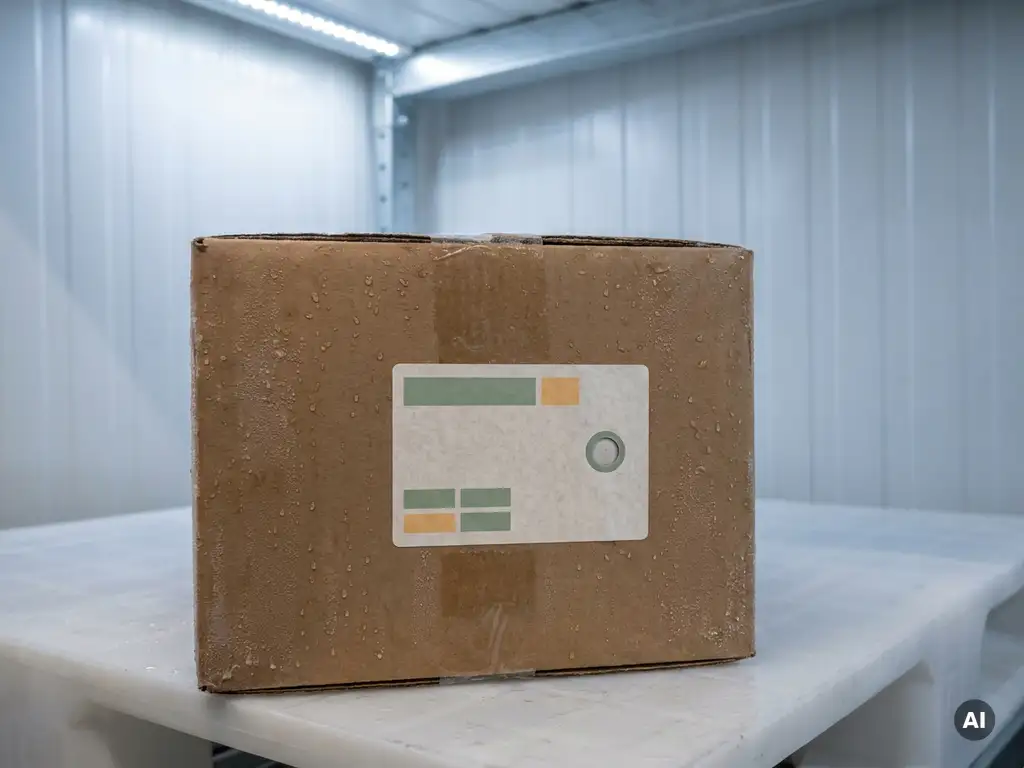
The best temperature data logger for pharmaceutical shipments combines certified accuracy, easy data retrieval without IT infrastructure dependencies, and a design that fits the strict operational environment of pharma logistics. For most pharmaceutical shippers in 2026, that means moving away from USB-dependent electronic loggers toward NFC-based or Bluetooth alternatives that eliminate the compliance headaches caused by plugging unknown devices into networked computers. This article unpacks the key questions pharma quality managers ask when evaluating their options.
What compliance standards must pharmaceutical temperature loggers meet?
Pharmaceutical temperature loggers must meet EN 12830 certification, which defines accuracy requirements for temperature recording instruments used in the transport of foodstuffs, pharmaceuticals, and other temperature-sensitive goods. EN 12830 sets calibration tolerances, recording intervals, and data integrity requirements that a logger must pass before it can be used in regulated cold chain environments.
Beyond EN 12830, pharmaceutical shipments often fall under GDP (Good Distribution Practice) guidelines, which require that temperature excursions are documented and traceable throughout the supply chain. This means a logger must not only record accurately but also produce a clear, retrievable report that can be reviewed during audits. The combination of certified hardware and accessible data reporting is what makes a temperature data logger suitable for pharmaceutical use rather than just technically capable.
When evaluating any logger, confirm it carries EN 12830 certification and that its reporting format produces a complete chain-of-custody record from dispatch to delivery.
Why can’t pharmaceutical companies use USB dataloggers on their computers?
Many pharmaceutical companies operate under strict IT security policies that prohibit plugging USB devices into networked computers. This is not a niche concern, it is a widespread operational barrier across the pharma sector. USB ports on networked machines create potential entry points for malware, and in regulated environments where data integrity is paramount, IT departments routinely block or disable them entirely.
The practical consequence is significant. A receiving pharmacist, lab technician, or quality manager may have the USB logger in hand but no compliant way to download its data. They cannot plug it into a restricted workstation, and using a personal laptop introduces its own audit trail and validation problems. The result is delayed reporting, manual workarounds, and in some cases, temperature data that never gets reviewed at all.
This is one of the most underappreciated pain points in pharmaceutical cold chain monitoring. A temperature data logger that relies solely on USB retrieval is functionally limited in environments where USB access is blocked, regardless of how accurate the device itself is.
What’s the difference between NFC, Bluetooth, and USB temperature loggers for pharma?
The key difference between NFC, Bluetooth, and USB temperature loggers is how data is retrieved and what infrastructure that retrieval requires. Each method has distinct implications for pharmaceutical environments where IT access, device compatibility, and audit readiness matter.
USB temperature loggers
USB loggers store data onboard and require a physical connection to a computer to download reports. As described above, this creates a direct conflict with pharma IT security policies. They also typically require proprietary software to read the data, adding another layer of IT validation burden in regulated environments.
Bluetooth temperature loggers
Bluetooth loggers transmit data wirelessly to a paired smartphone or tablet, usually through a dedicated app. This removes the USB dependency but introduces its own friction: the receiving party must have the correct app installed, Bluetooth must be enabled, and the device must be within range. In multi-party supply chains where receivers vary widely in technical capability, Bluetooth loggers can create inconsistent data retrieval experiences.
NFC temperature loggers
NFC loggers are read by tapping any NFC-enabled smartphone against the label, with no app required and no pairing process. The data is retrieved instantly and, in the case of the world’s first paper-based datalogger developed by Tapp, automatically uploaded to a cloud dashboard accessible to both sender and receiver without manual file transfers. For pharmaceutical logistics, this approach eliminates both the USB security conflict and the app dependency of Bluetooth, making it the most operationally straightforward option for diverse receiving environments.
How does a paper-based datalogger perform in pharmaceutical cold chain conditions?
A paper-based temperature data logger performs reliably across the temperature ranges typical of pharmaceutical cold chain shipments, generally between 2°C and 8°C for standard refrigerated medicines and down to lower ranges for frozen biologics. Paper-based loggers designed for cold chain use carry a waterproof coating that protects the label in humid refrigerated environments and during handling.
One area where paper-based loggers genuinely outperform many single-use electronic alternatives is battery performance. Traditional single-use plastic loggers use small lithium coin cells that are sensitive to cold temperatures, which can reduce their effective capacity during long refrigerated transports. Paper-based loggers use a lithium-free battery chemistry that maintains stable performance across cold conditions, meaning the logger continues recording accurately throughout the shipment without the risk of battery-related data gaps. The lithium-free design also eliminates the hazardous materials classification that applies to lithium batteries in air freight, making paper-based loggers straightforwardly flight-safe without additional documentation.
From a practical standpoint, paper-based loggers are applied like a label, require no setup or activation software, and leave no e-waste at the destination. Electronic data loggers, whether single-use or reusable, require e-waste disposal at end of life. Paper-based loggers are recyclable through standard paper waste streams globally, which aligns with the ESG and sustainability mission driving cold chain innovation increasingly relevant to pharmaceutical supply chain teams in 2026.
How Tapp supports pharmaceutical temperature monitoring
Tapp has developed paper-based temperature data loggers specifically designed to address the real-world barriers pharmaceutical shippers face. As the only provider of paper-based data logger technology, Tapp’s solution is built around the operational realities of pharma cold chains:
- No USB required: Data is retrieved by tapping any NFC-enabled smartphone, with no app to install and no computer connection needed, bypassing IT security restrictions entirely.
- EN 12830-certified accuracy: Tapp’s loggers meet the certification standard required for pharmaceutical temperature documentation.
- Automatic cloud reporting: When the label is tapped, a complete temperature report is uploaded to the TappOS dashboard, accessible to both sender and receiver without manual file transfers.
- Lithium-free and flight-safe: No hazardous materials classification, suitable for air freight without additional paperwork.
- Recyclable through standard paper waste: No e-waste at the destination, supporting pharmaceutical companies’ sustainability commitments.
If your pharmaceutical supply chain still relies on USB loggers or struggles with inconsistent data retrieval at receiving sites, it is worth exploring whether a paper-based alternative fits your workflow. Book an intro call with a cold chain expert to request a sample or discuss your specific cold chain requirements.
Frequently Asked Questions
How do I validate a new temperature data logger for use in our GMP-regulated pharmaceutical environment?
Validation typically involves three steps: confirming the logger carries EN 12830 certification (which covers calibration and accuracy), performing an in-house qualification test that mirrors your actual shipping lanes and temperature ranges, and documenting the results in a validation report that satisfies your Quality Management System. For paper-based or NFC loggers, you’ll also want to verify that the cloud reporting output meets your data integrity requirements under GDP guidelines, including audit trail completeness and tamper evidence. Working with your logger supplier to obtain calibration certificates and technical documentation upfront will significantly streamline the IQ/OQ process.
What happens if a temperature excursion is detected during a pharmaceutical shipment — what are the next steps?
When an excursion is detected, the first step is to quarantine the affected product and document the event immediately, including the time, duration, and magnitude of the excursion as recorded by the logger. The data should then be submitted to your Quality team for a formal excursion investigation, which typically involves assessing whether the product remained within its Mean Kinetic Temperature (MKT) limits and consulting stability data to determine if it is still fit for use. A clear, timestamped report from your logger — ideally retrieved at the point of receipt rather than hours later — is critical for making a fast, defensible release or reject decision.
Can a single temperature data logger cover both refrigerated (2–8°C) and frozen pharmaceutical shipments, or do I need different loggers?
Most temperature data loggers are configured for a specific monitoring range, and it is generally best practice to use a logger rated and validated for the precise range of your shipment rather than a single device stretched across both applications. Refrigerated (2–8°C) and frozen (e.g., -20°C or -70°C for biologics) shipments have very different excursion thresholds and alarm triggers, so using the correctly specified logger ensures your reports reflect meaningful pass/fail criteria. Check with your supplier whether they offer range-specific variants and confirm that each variant carries its own EN 12830 certification for the relevant temperature band.
How do we ensure receivers at third-party distribution centers or hospitals actually retrieve the temperature data from the logger?
This is one of the most common implementation challenges in multi-party pharmaceutical cold chains, and the retrieval method of the logger makes a significant difference. NFC-based loggers that require only a smartphone tap — with no app installation or pairing — have a much higher real-world retrieval rate than USB or Bluetooth alternatives because they place minimal technical demands on the receiver. Complementing this with a clear Standard Operating Procedure (SOP) that instructs receivers to tap the label upon delivery and confirm the report has been uploaded, combined with sender-side visibility through a shared cloud dashboard, creates an accountable loop that doesn’t rely on receiver initiative alone.
Are paper-based temperature loggers accepted by regulatory inspectors and auditors, or do inspectors expect traditional electronic devices?
Regulatory inspectors and GDP auditors evaluate whether your temperature monitoring solution meets the required standards — primarily EN 12830 certification, data integrity, and traceability — rather than mandating a specific physical format. A paper-based logger that is EN 12830-certified and produces a complete, tamper-evident, timestamped report accessible via a cloud audit trail is fully compliant with GDP requirements. If anything, the automatic cloud upload and dual sender/receiver access that NFC paper loggers provide can make audit preparation faster and more straightforward than systems that rely on manual CSV file transfers from USB devices.
What should I look for in a temperature logger supplier to ensure long-term compliance support?
Beyond the device itself, look for a supplier that provides current calibration certificates, is responsive to requests for technical documentation (such as accuracy specifications and battery performance data across temperature ranges), and offers a reporting platform that can be updated to reflect evolving regulatory requirements without requiring hardware replacement. It’s also worth confirming that the supplier has experience working within pharmaceutical supply chains specifically, since the compliance expectations in pharma are materially different from food or general logistics. A supplier willing to engage with your Quality and IT teams during onboarding is a strong signal of long-term partnership capability.
How do paper-based temperature loggers fit into our company's Scope 3 emissions reporting for the supply chain?
Single-use electronic loggers generate e-waste at every destination, which contributes to your Scope 3 emissions footprint under the waste and end-of-life treatment category. Paper-based loggers, by contrast, are recyclable through standard paper waste streams globally, meaning they can be disposed of at the receiving site without specialist e-waste collection — a meaningful difference at scale across thousands of shipments per year. If your ESG team is building out Scope 3 reporting under frameworks such as GHG Protocol or CDP, switching from single-use plastic electronic loggers to paper-based alternatives is a quantifiable, auditable improvement that aligns operational compliance with sustainability commitments.