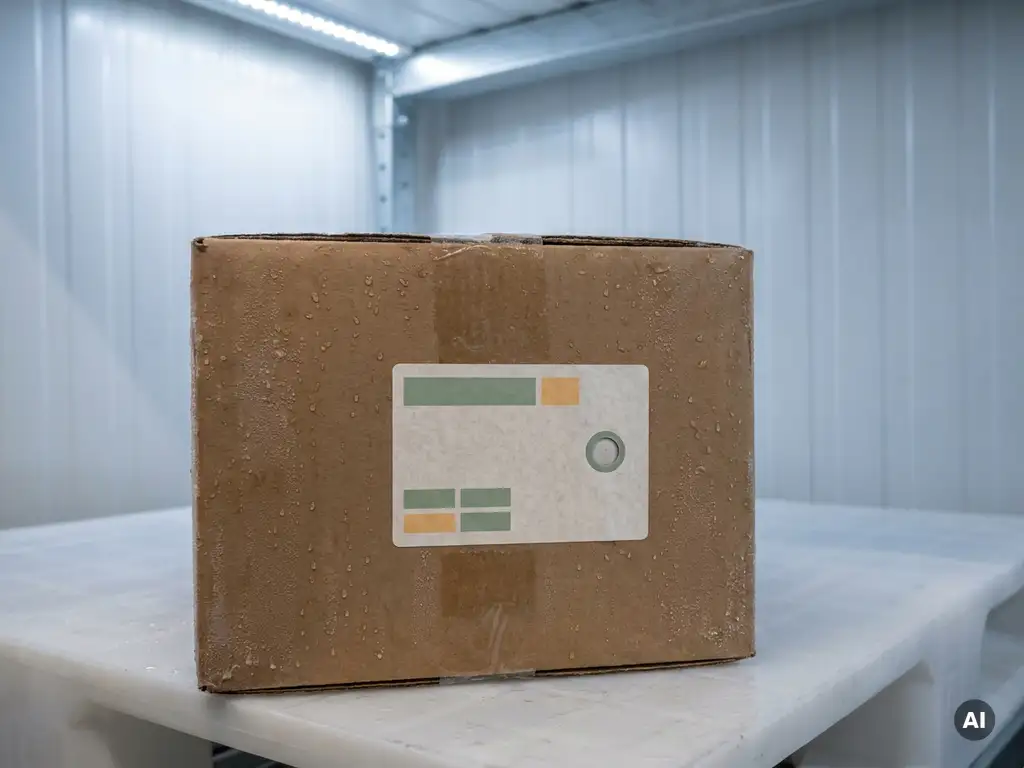
The best temperature data logger for food and beverage transport combines certified accuracy, ease of use, and a format that works across the entire supply chain without requiring dedicated hardware. For most food shipments today, the right choice depends on your volume, sustainability goals, and how quickly you need access to temperature records after delivery.
Food and beverage supply chains face unique pressures: perishable goods, multiple handoffs, and recipients with varying levels of technical equipment. The sections below break down the key questions buyers ask when choosing a temperature data logger for food transport.
What certification should a food transport data logger have?
A food transport temperature data logger should carry EN 12830 certification. This European standard defines the accuracy requirements for instruments used to measure and record temperatures during the transport, storage, and distribution of chilled, frozen, and deep-frozen food. A logger with EN 12830 certification has been independently verified to meet the measurement tolerances that food safety auditors expect.
When evaluating loggers, look for this certification listed explicitly in the product documentation. EN 12830 sets out requirements for measurement range, accuracy tolerances, alarm functions, and data storage, so a certified device gives you a documented, defensible record of temperature conditions throughout a shipment.
Beyond EN 12830, some food sectors also reference HACCP principles when specifying monitoring equipment. While certification requirements vary by country and supply chain context, EN 12830 is the most widely recognized benchmark for professional food transport monitoring in international trade.
What features matter most in a food and beverage data logger?
The most important features in a food and beverage temperature data logger are measurement accuracy, battery reliability, ease of data retrieval, and compatibility with your existing workflow. A logger that is difficult to read, requires special software, or creates extra steps for the receiving party adds friction without improving food safety outcomes.
Here are the features that matter most in practice:
- Measurement accuracy: The logger should cover the temperature range relevant to your product, whether that is chilled produce, frozen goods, or ambient-sensitive items. Accuracy within the EN 12830 tolerances is the professional standard.
- Battery performance: The battery must last the full duration of the shipment without degrading in cold environments. This is an area where paper-based loggers have a practical edge over many single-use electronic options. Because paper-based loggers use a lithium-free battery chemistry optimized for low-power NFC operation rather than continuous Bluetooth transmission, they are less prone to rapid drain in cold conditions and do not carry the disposal risks associated with lithium cells.
- Ease of data retrieval: Loggers that require USB connections, proprietary software, or dedicated readers create bottlenecks. The receiving party may not have the right equipment, which delays reporting.
- Cloud access: Both the sender and the receiver should be able to access the temperature report without depending on the other party to share a file.
- Waterproofing and transport compatibility: Food shipments move through cold storage, refrigerated trucks, and loading docks. A logger needs to handle moisture and physical handling across road, sea, air, and rail.
What’s the difference between USB, Bluetooth, and NFC data loggers?
USB, Bluetooth, and NFC data loggers differ in how temperature data is retrieved after a shipment. USB loggers require a physical connection to a computer to download records. Bluetooth loggers transmit data wirelessly to a smartphone or gateway, sometimes during transit. NFC loggers transfer data instantly when a smartphone is tapped against the label, with no app or dedicated hardware required.
USB data loggers
USB loggers are the traditional industry format. After delivery, the device is plugged into a computer and data is extracted using proprietary software. This works well in controlled warehouse environments, but creates problems when the receiving party does not have the right software installed or when company IT policies prevent connecting external USB devices to networked computers. This is a known pain point in pharmaceutical and food distribution settings.
Bluetooth data loggers
Bluetooth loggers can broadcast temperature data to a nearby smartphone or gateway device. Some models allow in-transit monitoring when paired with a gateway. However, Bluetooth requires the receiving party to have a compatible app installed, and battery consumption is higher because the radio is continuously active. In cold environments, this continuous drain can shorten the effective logging window.
NFC data loggers
NFC loggers store temperature data passively and transfer it in a single tap from any NFC-enabled smartphone. No app is needed, no USB cable is required, and no Bluetooth pairing is necessary. This makes them the most accessible option for supply chains where receivers have varying levels of technical infrastructure. Paper-based NFC loggers also eliminate the e-waste associated with plastic electronic devices, since they can be recycled through standard paper waste streams.
Are paper-based data loggers reliable enough for food safety compliance?
Yes, paper-based data loggers are reliable enough for food safety applications. Modern paper-based loggers achieve EN 12830-certified accuracy across a wide temperature range, making them a professionally valid alternative to plastic electronic loggers. The paper substrate does not compromise measurement performance, and waterproof coatings protect the logger through the physical demands of food transport.
A common concern is whether a paper-based format can withstand cold storage environments, moisture, and handling across multiple transport legs. In practice, paper-based loggers designed for cold chain use are built with these conditions in mind. The waterproof coating handles condensation and wet environments, and the battery performs reliably in cold conditions because it is not powering a continuous wireless signal.
One practical advantage is that paper-based loggers are lighter and thinner than plastic devices, making them easier to attach directly to packaging without adding bulk. They also remove the e-waste disposal burden that electronic loggers create, which matters to food companies managing sustainability targets alongside operational efficiency.
How Tapp’s paper-based data loggers support food and beverage transport
Tapp has developed the world’s first paper-based temperature data logger, designed specifically for supply chains that need certified accuracy, simple data access, and a lower environmental footprint. Here is what the solution delivers for food and beverage shippers:
- EN 12830-certified accuracy across a range of -30°C to 50°C, covering chilled, frozen, and ambient food shipments
- NFC smartphone tap for instant data retrieval with no app, no software, and no dedicated hardware required by the receiving party
- Automatic cloud upload to the TappOS dashboard the moment a label is tapped, giving both sender and receiver access to the full temperature report
- Lithium-free battery that performs reliably in cold environments without the disposal concerns of lithium-based electronics
- Recyclable through standard paper waste streams globally, reducing e-waste by up to 90% compared to single-use plastic loggers
- Waterproof coating and compatibility with road, sea, air, and rail transport
If you are looking for a temperature data logger that works across your entire food supply chain without adding complexity for your receiving partners, explore Tapp’s paper-based loggers and request an intro call with an expert to test in your own shipments.
Frequently Asked Questions
How do I know which temperature range to choose for my food shipments?
The right temperature range depends on the product category you are shipping. Frozen goods typically require monitoring down to -18°C or lower, chilled produce and dairy usually fall in the 0°C to 8°C range, and ambient-sensitive items like chocolate or wine may need monitoring between 15°C and 25°C. A logger with a broad range such as -30°C to 50°C covers all three categories, which is useful if you ship mixed product types or want a single logger format across your entire operation.
Can a single data logger be used across multiple transport legs, such as road followed by sea freight?
Yes, a single logger can and should cover the full journey from origin to destination, including multiple transport legs. This gives you a continuous, unbroken temperature record rather than separate logs for each leg, which is what food safety auditors and quality teams typically require. Make sure the logger you choose is rated for the physical conditions across all modes of transport, including vibration, moisture, and temperature extremes specific to sea containers or air freight holds.
What happens if the logger records a temperature excursion during transit — what steps should I take?
When a temperature excursion is detected, the first step is to retrieve the full temperature report immediately and note the duration, magnitude, and timing of the breach. Share the report with your quality team and, if applicable, your customer before the goods are accepted or distributed further. Depending on the severity and product type, you may need to quarantine the shipment and conduct a product safety assessment in line with your HACCP plan. Having a cloud-accessible report that both sender and receiver can view simultaneously speeds up this decision-making process significantly.
How many data loggers do I need per shipment, and where should I place them?
For most standard shipments, one logger per pallet or per temperature zone within a vehicle is the recommended starting point. Placement matters: attach the logger to the product packaging or pallet in a location that reflects the warmest point in the load, which is typically near the door or at the top of the stack, as these areas are most vulnerable to temperature fluctuations during loading and unloading. For high-value or temperature-sensitive shipments, some shippers use multiple loggers to map temperature distribution across the full load.
Do recipients need to do anything special to access the temperature report when using an NFC logger?
No special setup is required. Any NFC-enabled smartphone — which includes virtually all modern Android and iPhone models — can tap the logger label to instantly retrieve the temperature report, typically via a web browser without needing to download an app. This is one of the key practical advantages of NFC over USB or Bluetooth loggers, since it removes the dependency on the receiving party having specific software, hardware, or IT permissions in place.
How do paper-based loggers fit into a company's sustainability reporting?
Paper-based loggers can contribute directly to scope 3 emissions reduction and e-waste targets within a company’s sustainability reporting framework. Because they are recyclable through standard paper waste streams and use a lithium-free battery, they eliminate the hazardous waste disposal costs and carbon footprint associated with single-use plastic electronic loggers. For food companies that are already tracking packaging sustainability metrics, switching to paper-based loggers is a measurable, reportable improvement that aligns with both ESG commitments and operational efficiency goals.
What is the typical shelf life of a data logger before it is activated, and how should loggers be stored before use?
Most quality data loggers have a shelf life of 12 to 24 months before activation, though this varies by manufacturer and battery type. Before use, loggers should be stored in a cool, dry environment away from direct sunlight and extreme temperatures to preserve battery performance and sensor calibration. Always check the manufacturer’s storage guidelines and expiry date before deploying a logger on a shipment, particularly if you are purchasing in bulk and storing inventory over several months.